|
Great Indian Bustard Habitat and Range
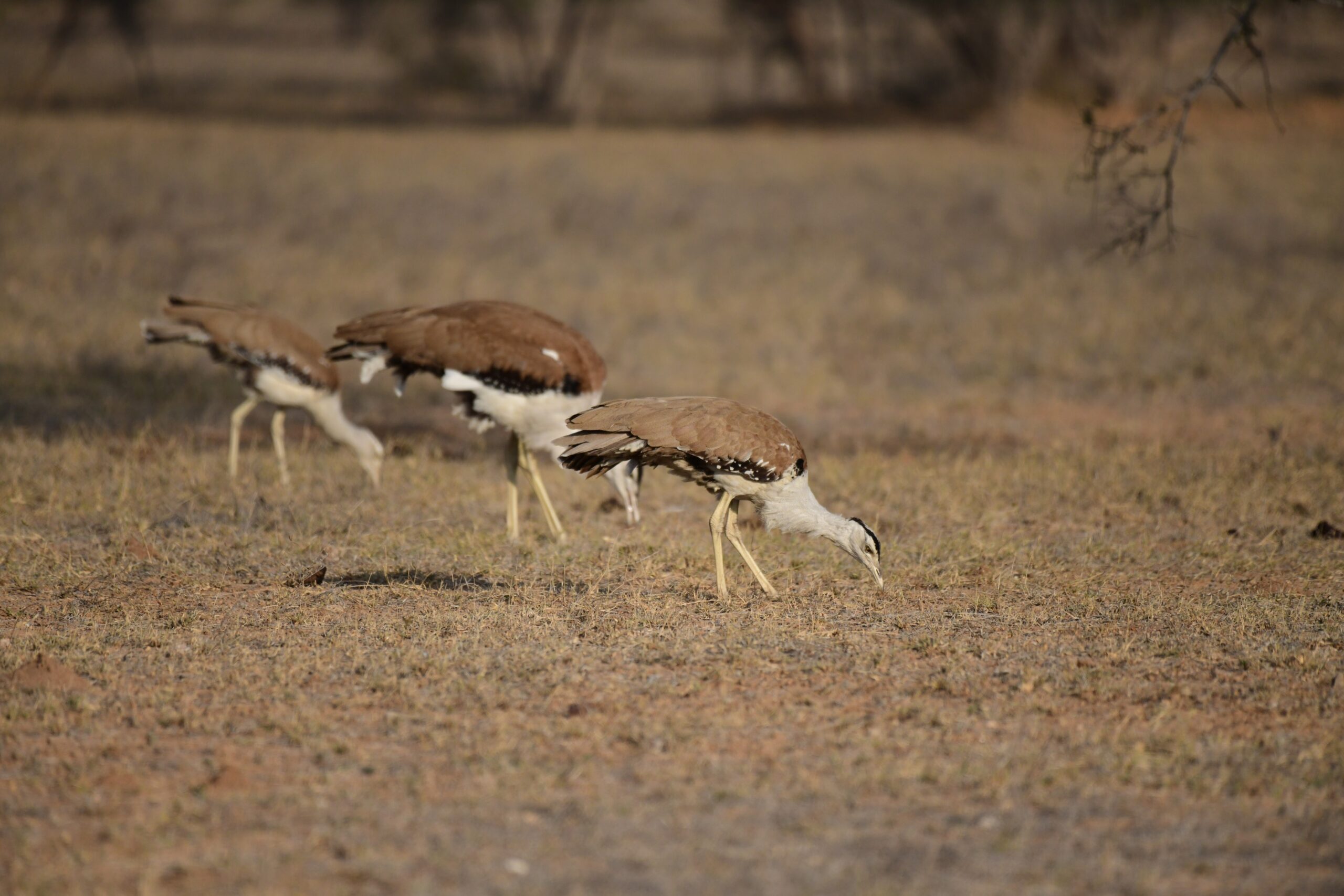
Project Great Indian Bustard (GIB) has entered the fourth year of its captive breeding programme, with around 70 birds now in captivity, marking progress in conserving one of India’s most critically endangered species.
Great Indian Bustard (GIB) :
| Aspect | Key Details |
|---|---|
| Common Name | Great Indian Bustard (GIB), locally known as “Godawan” in Rajasthan. |
| Habitat | Agro-grasslands; endemic to the Indian subcontinent, mainly found in Rajasthan with smaller populations in Gujarat, Maharashtra, Karnataka and Andhra Pradesh. |
| Family | Otididae. |
| Diet | Omnivorous; feeds on insects, small vertebrates, seeds and plant material. |
| Key Characteristics | Exhibits sexual dimorphism; males have a prominent gular pouch used in mating displays. |
| Major Threats | Habitat loss, hunting, and collisions with high-tension power lines. |
| Conservation Status | IUCN – Critically Endangered; Wildlife (Protection) Act, 1972 – Schedule I; CITES – Appendix I. |
| Project GIB | Species recovery programme under the Integrated Development of Wildlife Habitats. |
| Captive Breeding Programme | Launched to prevent extinction; currently in its fourth year with around 70 birds in captivity. |