|
Global Forest Goals Report 2026
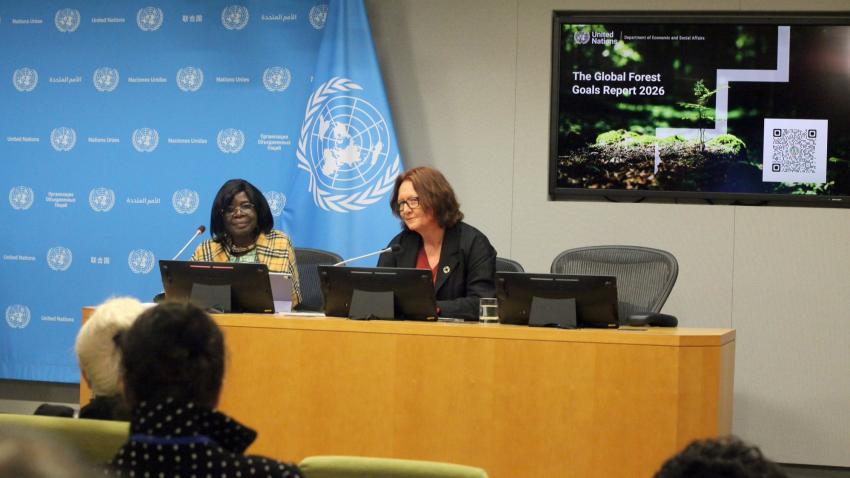
The report assesses progress towards the 6 Global Forest Goals for 2030 under the United Nations Strategic Plan for Forests 2017–2030. It is currently relevant due to continuing forest loss, degradation pressures, and gaps in forest financing.
Global Forest Goals Report:
| Dimension | Key Details |
|---|---|
| Prepared By | The report is prepared by the UN Department of Economic and Social Affairs and the UN Forum on Forests Secretariat. |
| Assessment Scope | The report assesses progress towards the 6 Global Forest Goals for 2030 and associated targets of the United Nations Strategic Plan for Forests 2017–2030. |
| UNFF | The United Nations Forum on Forests has been established in 2000 as an intergovernmental body comprising all UN members and members of specialised agencies. |
| UNFF Aim | UNFF provides for management, conservation, and sustainable development of all types of forests. |
| Forest Area | Forest area has shrunk by over 40 million hectares between 2015 and 2025. |
| Major Drivers | Major drivers of forest loss comprise agricultural expansion and rising demand for fuelwood and charcoal. |
| Sustainable Forest Management Barriers | Barriers comprise weak governance, insecure land tenure, illegal trade, and limited institutional capacity. |
| Degradation Pressures | Forest degradation intensifies due to droughts, wildfires, heatwaves, pests, and diseases. |
| Finance Gap | Forest finance has reached US$84 billion in 2023 but remains below the estimated US$300 billion needed annually by 2030. |
| Recommendations | The report recommends stronger coordination, higher forest financing, deforestation-free supply chains, and cleaner energy access to reduce dependence on fuelwood and charcoal. |