|
Chichón Volcano, Mexico
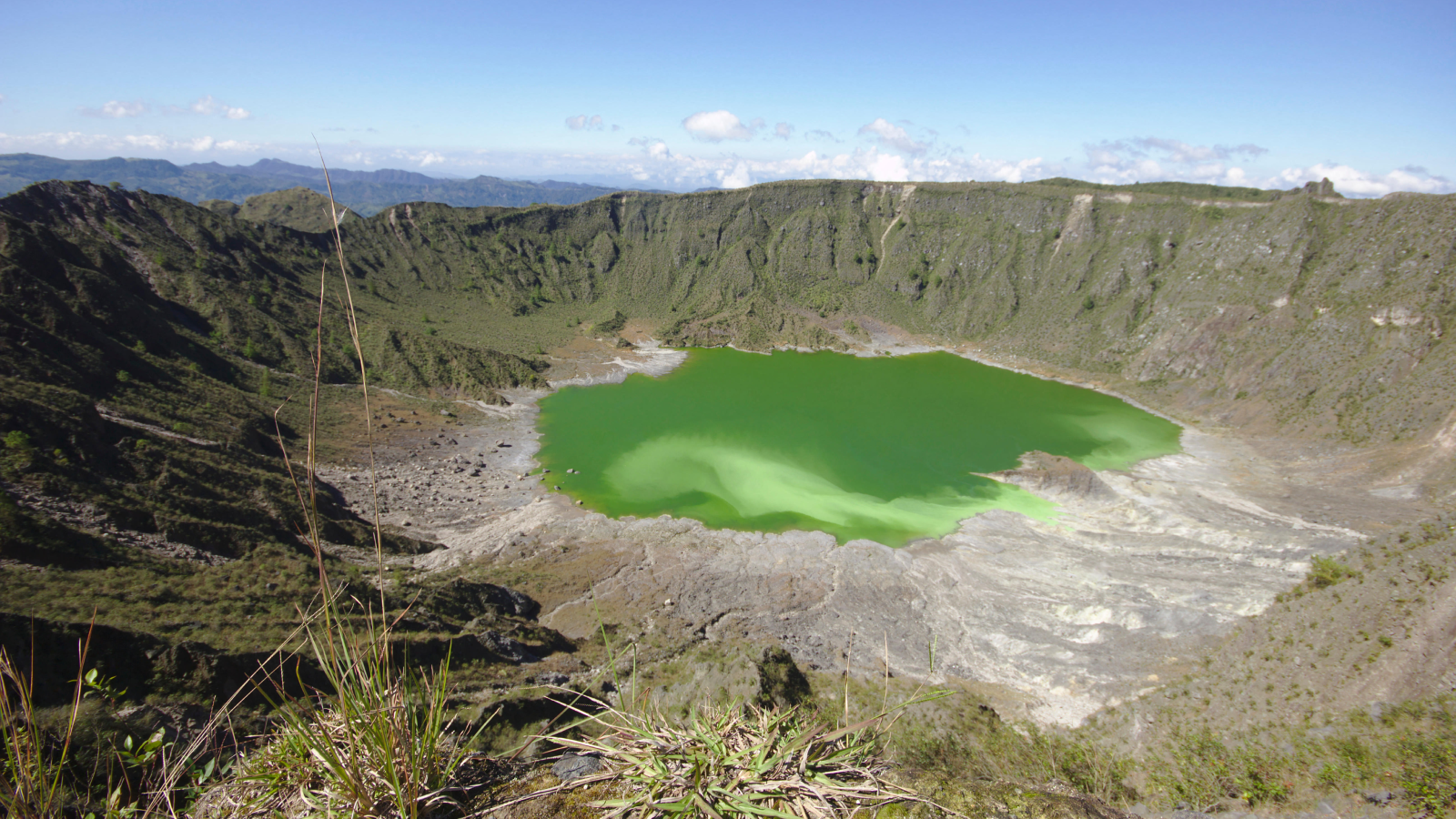
Recent unusual activity at Chichón volcano in southern Mexico, including crater lake changes and shallow seismic signals, indicates an active hydrothermal system. The developments have led to continued monitoring under a Yellow alert, phase 2.
Chichón Volcano:
| Dimension | Key Details |
|---|---|
| Name Origin | Derived from the Chiapas term “Chichón,” meaning little bump |
| Location | Located in southern Mexico |
| Volcano Type | Classified as a stratovolcano |
| Geological Setting | Part of the Trans-Mexican Volcanic Belt above the subduction of the Cocos Plate beneath the North American Plate |
| Crater Feature | Contains a crater lake formed after the 1982 eruption |
| Historical Eruption | 1982 eruption killed over 2,000 people and caused global temperature dip due to sulfur dioxide emissions |
| Current Alert Status | Yellow alert, phase 2 indicating abnormal but non-eruptive activity |
| Crater Lake Observations | High temperature up to 118°C with chemical presence of sulfates, chloride, H₂S and CO₂ |
| Seismic Activity | Shallow low-magnitude quakes indicating an active hydrothermal system |
| Potential Hazards | Provides risk of phreatic explosions, toxic gas emissions and localized hydrothermal hazards |
| Monitoring Authority | National Autonomous University of Mexico deploys drones and remote sensing for heat and gas monitoring |
| Restricted Zone | Crater and immediate surroundings remain a permanent danger zone |