|
Australia’s Finke River Identified as World’s Oldest Surviving River System
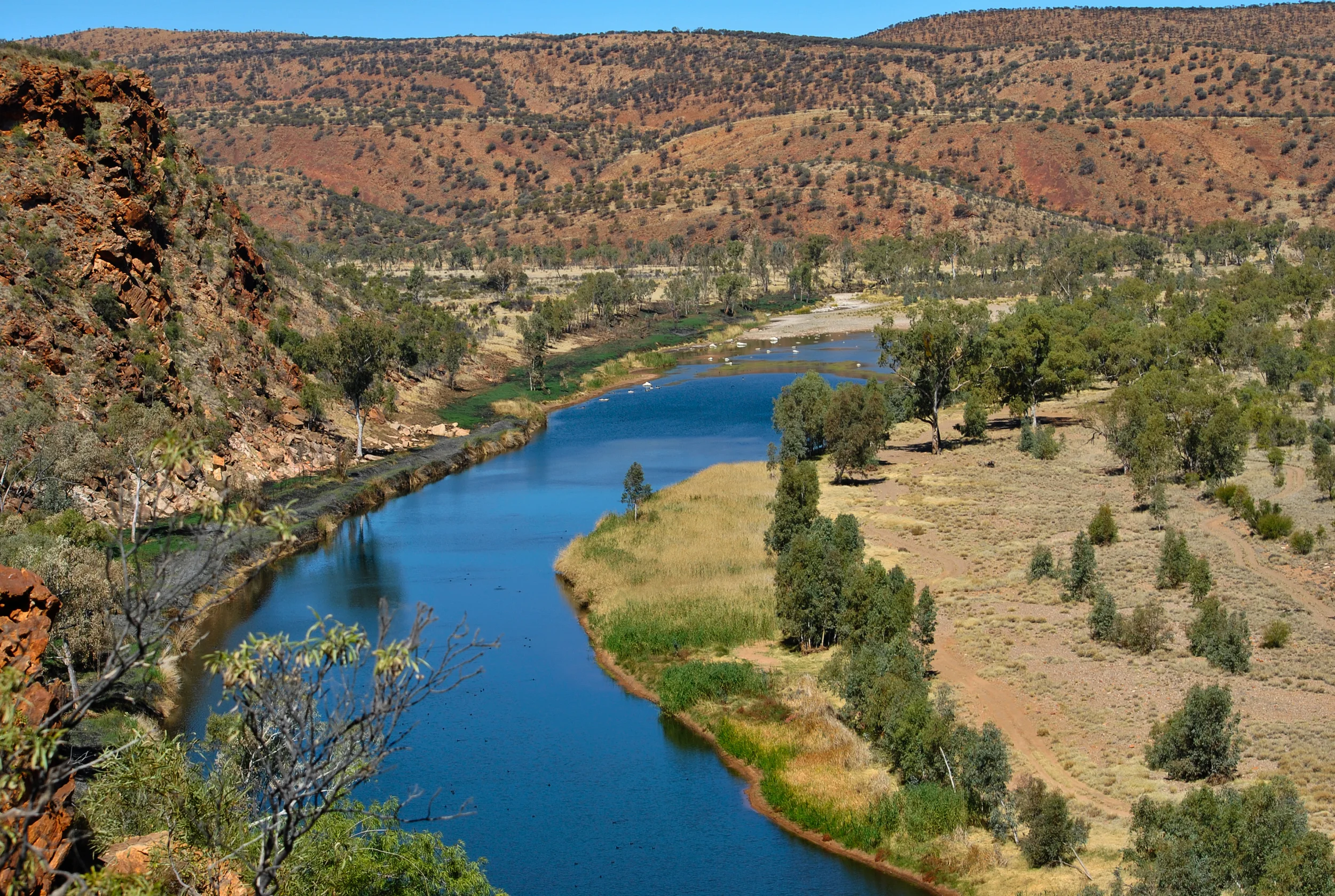
Scientists, based on recent geological studies, identify Australia’s Finke River as the world’s oldest continuously surviving river system, dating back about 300–400 million years. The finding is linked to geological evidence from its course through the MacDonnell Ranges and the concept of antecedence.
Finke River (Australia):
| Dimension | Key Details |
|---|---|
| Estimated age | Dates back about 300–400 million years. |
| Country | Australia. |
| Location / coverage | Traverses the Northern Territory and parts of South Australia; flows through the arid interior of Australia. |
| Length | Stretches for about 640 kilometres. |
| Indigenous name | Known as Larapinta to the Indigenous Arrernte people. |
| Flow nature | Does not flow year-round; for most of the year exists as isolated waterholes; becomes a connected river briefly after intense rainfall. |
| Continuity as a river system | Scientists confirm waterholes and dry channels together comprise one continuous ancient river system. |
| Key geological feature | Cuts directly through the hard quartzite mountains of the MacDonnell Ranges, forming deep gorges. |
| Antecedence | Explained by antecedence, where a river is older than surrounding mountains; as ranges uplift due to tectonic activity, the river maintains its course by continuously eroding downward. |
| Antecedent river | River that existed before uplift of mountains or plateaus and maintained its course by eroding downward as land rose; such rivers are extremely rare today. |
| Reasons for survival | Survives due to deeply entrenched channel and slow geological changes in central Australia. |
| Scientific basis cited | Erosion patterns, sediments, and radioactive isotope dating indicating the river system is at least as old as the terrain it crosses. |