|
Annual Plan of Operation to Conserve Neelakurinji
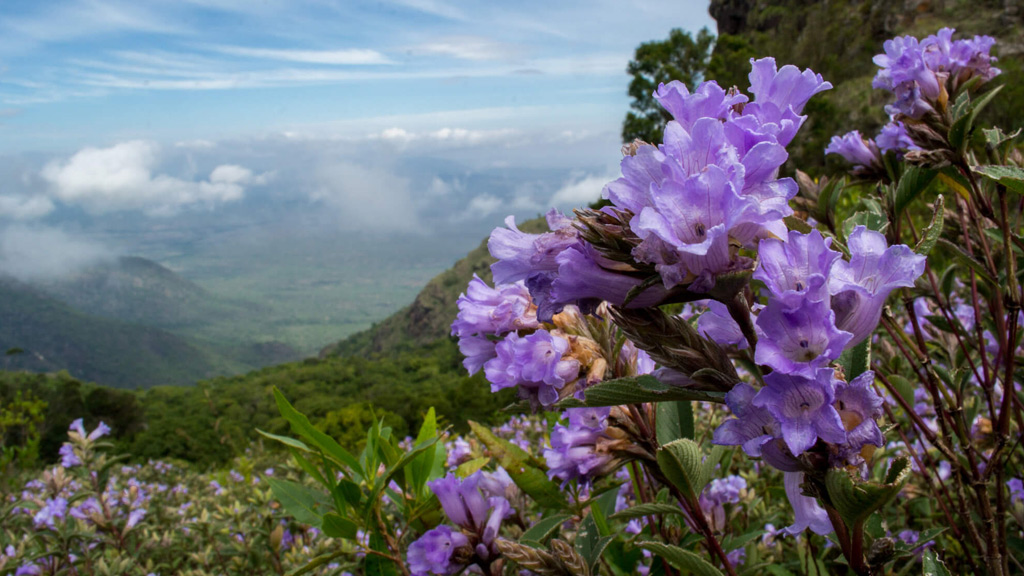
MoEFCC petitions the National Green Tribunal (NGT) to prepare and submit a structured Annual Plan of Operation (APO) dedicated to conserving the endemic Neelakurinji plant. The petition urges state forest departments to submit annual operational plans covering budgetary allocations, habitat monitoring, and anti-poaching measures.
Neelakurinji Conservation:
| Dimension | Key Details |
|---|---|
| Habitat Restoration Focus | Provides for mitigating risks from invasive plant species, illegal land conversions, forest fires, and unregulated eco-tourism. |
| Invasive Plant Species | Lists invasive plant species examples: Acacia and Eucalyptus. |
| Regional Synchronization | Provides for coordinated conservation across contiguous forest stretches spanning the Nilgiri Biosphere and surrounding mountain ranges. |
| Scientific Name | Neelakurinji is Strobilanthes kunthiana. |
| Family | Neelakurinji belongs to the family Acanthaceae. |
| Habitat and Elevation | Neelakurinji is endemic to high-altitude Shola forest-grassland mosaics of the Western Ghats, typically between 1,300 m and 2,400 m elevation. |
| Geographical Distribution | Occurs across Kerala, Tamil Nadu, and Karnataka, with minor patches in the Eastern Ghats in the Shevaroy and Sandur Hills. |
| Flowering Mechanism | Neelakurinji comprises a plietennial shrub exhibiting masting, blooms once every 12 years, sets seeds, and subsequently dies. |
| Cultural Significance | Provides for the Nilgiri Hills being called the “Blue Mountains,” and the indigenous Paliyan tribe historically uses its 12-year flowering cycle to calculate individual ages. |
| Legal Status | Neelakurinji is listed under Schedule III of the Wildlife (Protection) Act, 1972, as updated by the 2022 Amendment Act. |
| Prohibited Acts | Uprooting, damaging, cultivating, possessing, or trading the plant or its flowers without explicit government permission is illegal. |
| Penal Provision | Violations carry penalties of up to 3 years imprisonment along with fines. |
| Protected Area | Kurinjimala Sanctuary, with an area of 32 sq km in Idukki district, Kerala, is established specifically to preserve the core Neelakurinji habitat. |
| NGT Legal Basis | NGT is formed under the National Green Tribunal Act, 2010 for rapid disposal of environmental and forest protection disputes. |
| NGT Time-Bound Disposal | NGT mandates disposal of applications within 6 months of filing. |
| NGT Adjudication Standard | NGT adjudication is governed by principles of Natural Justice rather than procedural rigidity under the Code of Civil Procedure, 1908. |