|
Rare waterspout-like vortex observed over Brahmaputra in Assam
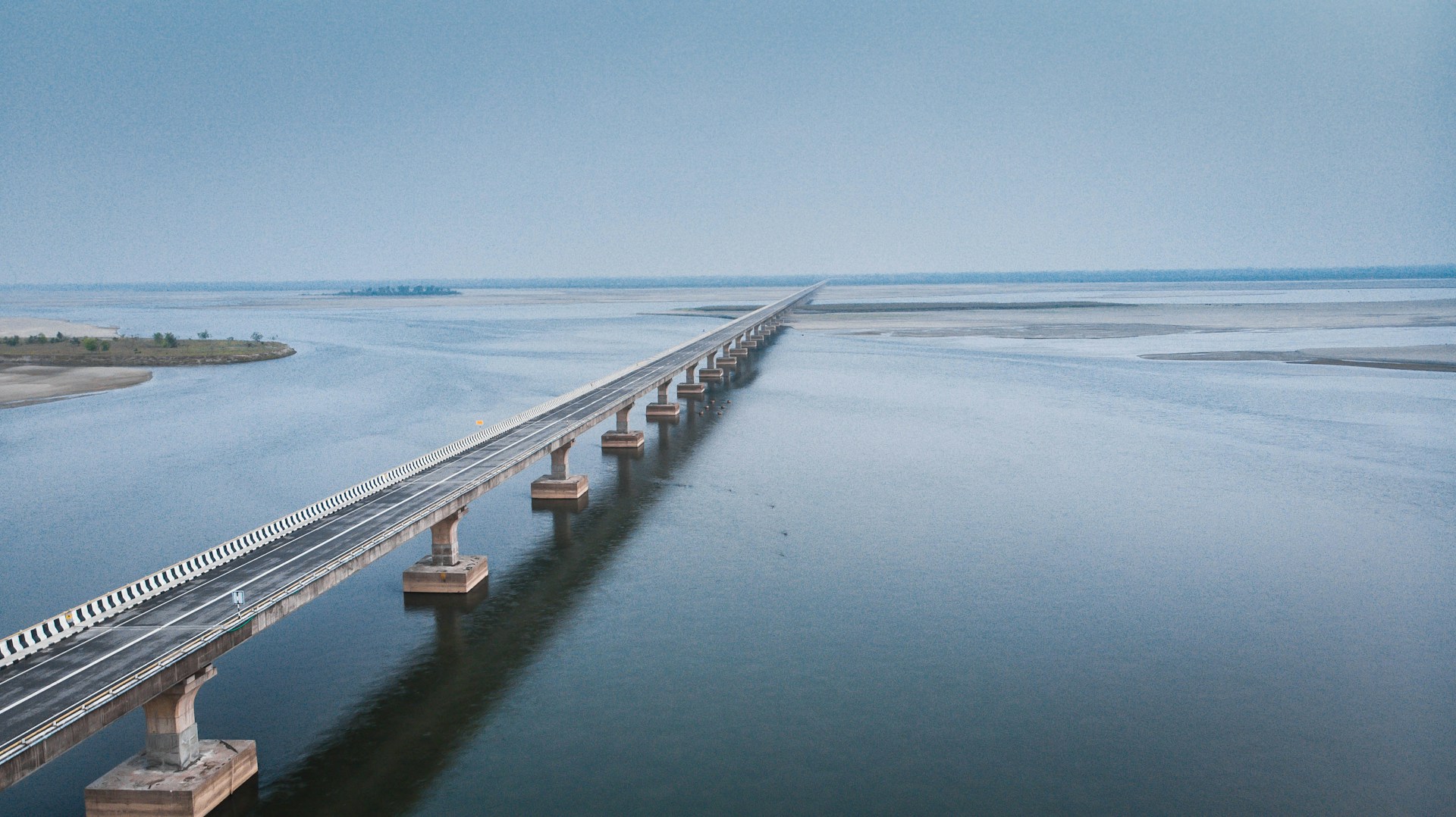
A rare weather phenomenon resembling a waterspout is observed over the Brahmaputra in Assam’s Barpeta district. The news highlights the phenomenon of waterspouts, including their characteristics, formation conditions, and types.
Waterspout:
| Dimension | Key Details |
|---|---|
| Definition | A waterspout comprises a large column of air and mist rotating over a water body. |
| Intensity and duration | A waterspout is less intense and typically lasts for around 5 minutes, and it can last up to 10 minutes. |
| Typical size and wind speed | The average waterspout can be around 165 feet in diameter, with wind speeds of 100 kilometres per hour. |
| Formation conditions | Waterspouts occur when there are high levels of humidity and relatively warm water temperatures compared to the overlying air. |
| Types | Waterspouts comprise two types: tornadic waterspouts, and fair-weather waterspouts. |
| Tornadic waterspouts | Tornadic waterspouts are tornadoes that form over water, or move from land to water, and they have the same characteristics as a land tornado. |
| Tornadic waterspouts: associated conditions | Tornadic waterspouts are associated with severe thunderstorms, and are often accompanied by high winds and seas, large hail, and frequent dangerous lightning. |
| Fair-weather waterspouts | Fair-weather waterspouts are usually formed under calmer conditions along the dark flat base of a line of developing cumulus clouds. |
| Fair-weather waterspouts: thunderstorm link | Fair-weather waterspouts are generally not associated with thunderstorms. |
| Development direction | Fair-weather waterspouts develop from the water’s surface upward, while tornadic waterspouts develop downward in a thunderstorm. |
| Movement | Fair-weather waterspouts typically move very little due to light wind conditions. |