|
416 Marriages Solemnised at Guruvayur Temple, Kerala
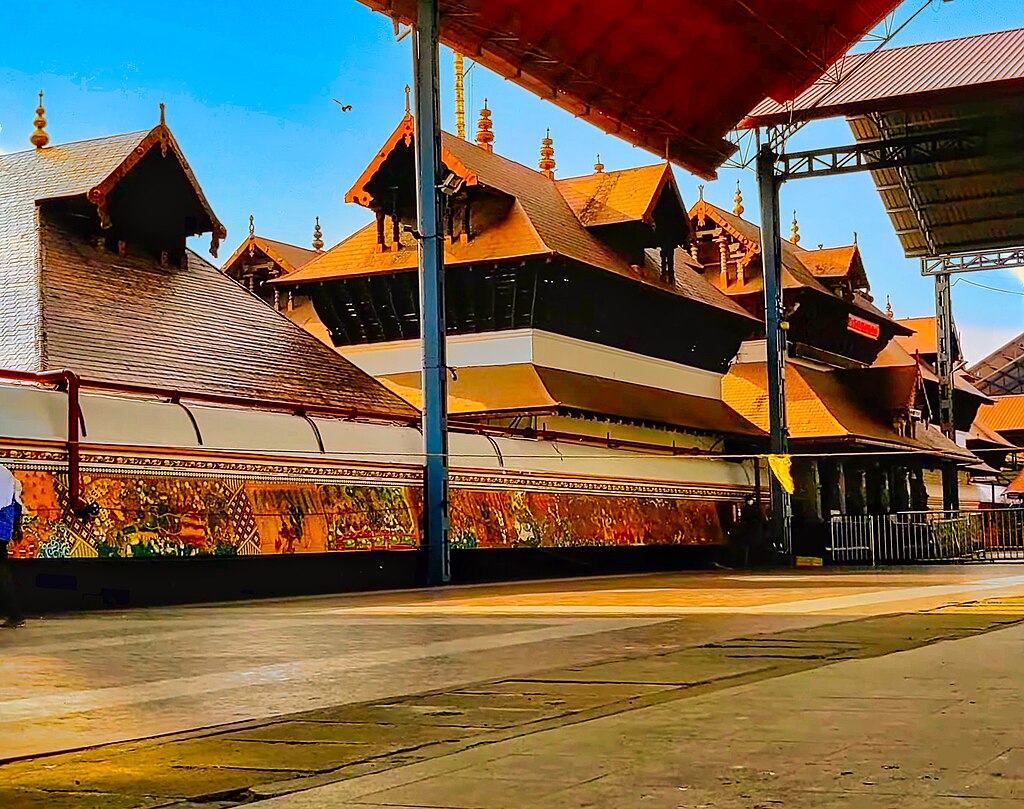
A news report records 416 marriages solemnised at Guruvayur Temple, Kerala, on a single day recently. Guruvayur Temple comprises a Hindu temple in Guruvayur town, Thrissur District, dedicated to Guruvayurappan.
Guruvayur Temple:
| Dimension | Key Details |
|---|---|
| Also known as | The temple comprises the epithet “Dwarka of the South”. |
| Presiding deity | The temple comprises dedication to Guruvayurappan, a form of Lord Vishnu worshipped as Baby Krishna. |
| Devotee footfall | The temple comprises the fourth biggest shrine in India in terms of devotees every day. |
| Architecture style | The temple comprises traditional Kerala-style temple architecture with a gabled roof, wooden carvings, and intricate sculptures. |
| Key structures on premises | The premises comprise structures such as the Nalambalam, Balikkal, and Deepastambam. |
| Murals | The sanctum sanctorum wall comprises ancient 17th-century murals. |
| Dwajasthamba | The Dwajasthamba comprises a flagstaff around 70 feet tall, fully covered with gold. |
| Thulabharam offering | Thulabharam comprises weighing devotees against jaggery, coconuts, sugar, or bananas on a giant set of scales, with the quantity given as an offering. |
| Elephants | The temple comprises a large population of captive male Asian elephants. |
| Punnathur Kotta elephant sanctuary | Punnathur Kotta elephant sanctuary, very close to the temple, comprises 56 elephants. |
| Literary and recorded-history references | Mentions of “Kuruvayur” comprise the Tamil literature “Kokasandesam” (14th century C.E.) and references in the 16th century C.E.; the earliest recorded history comprises tracing to the 17th century C.E. |
| Selected dated events | Key dated events comprise rebuilding of the present structure in 1638 C.E.; Dutch plunder and temple fire in 1716 AD; rebuilding in 1747 AD; capture of Guruvayur and a ransom demand of 10,000 fanams in 1766; destruction of smaller shrines and temple fire in 1789; and reinstallation of the idol in 1792. |