|
Madhya Pradesh Restarts Excavation at Vaishya Tekri Stupa
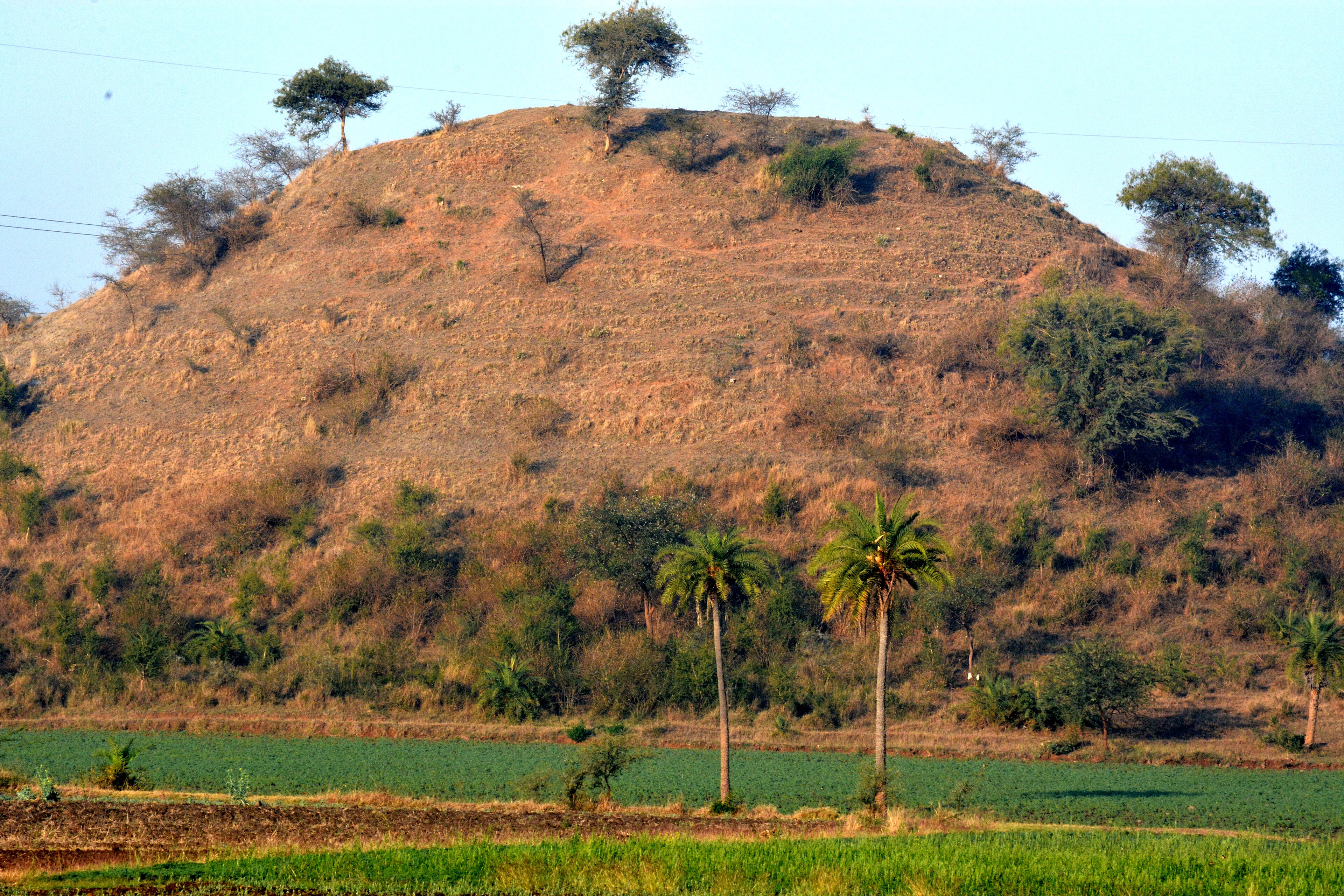
The Madhya Pradesh government begins restoring Buddhist monuments linked to the Mauryan emperor Ashoka, starting with a fresh excavation at Vaishya Tekri in Ujjain. The renewed excavation revives scholarly scrutiny of the site’s scale, earlier findings, and the strength of evidence connecting it to Ashoka.
Vaishya Tekri Stupa Excavation:
| Dimension | Key Details |
|---|---|
| Site status | Vaishya Tekri and the nearby Kumbhar (or Kumhar) Tekri remain relatively undisturbed, save for a power line and a pylon running through the area. |
| Scale | As per Peter Skilling’s 2011 paper, Vaishya Tekri comprises a base of about 350 feet and a height of about 100 feet. |
| Scale comparison cited | The article compares Vaishya Tekri with a 54-foot stupa at Sanchi, with Vaishya Tekri described as notably larger. |
| Earlier excavation agency and period | Initial excavations comprise work by the Department of Archaeology of the erstwhile Gwalior State in 1938-39. |
| Earlier excavation findings | The 1938-39 excavations comprise discoveries of large bricks and punch-marked coins. |
| Dating stated by archaeologists | Based on the 1938-39 findings, archaeologists date the structures to the Mauryan period. |
| Scholarly caution on evidence | Historians urge caution, noting the excavation report is decades old and its interpretation was shaped by earlier accounts, particularly Alexander Cunningham’s writings on Ashoka. |
| Ujjayini location | Ujjayini (modern Ujjain) comprises a location on the Sipra river, and the Sipra comprises a tributary of the Chambal. |
| Ujjayini trade-route links | Historian Romila Thapar notes Ujjain links trade routes to western coastal ports like Broach and Sopara, and to Pataliputra. |
| Classical reference | Ptolemy refers to Ujjain as “Ozene.” |
| Ashoka’s Avanti posting | The article states Ashoka is sent to Avanti as viceroy by his father, Emperor Bindusara. |
| Evidence cited for Ujjain posting | Evidence for Ashoka’s Ujjain posting comprises Ashoka’s own edicts, issued later as emperor, which mention a prince (kumara) stationed at Ujjain. |
| Vidisha link | Experts note Vidisha lies directly on the route from Pataliputra to Ujjain, and the article states Ashoka stops at Vidisha where he meets and marries Vedisadevi (Devi), daughter of a local merchant, with Thapar noting records do not confirm a legal marriage. |
| Children | The article states the couple comprises two children: Mahinda and Samghamitta. |
| Material evidence limitation noted | Scholars point out that no Ashokan pillars have been found in Ujjain, particularly near the stupas. |
| Local tradition link | Local traditions in Sri Lanka associate Vaishya Tekri with Devi, with the name reportedly deriving from her merchant (Vaishya) family background. |
| Xuanzang account (Kumhar Tekri) | Chinese scholar-pilgrim Xuanzang, who visits Ujjain in the 7th century, records a stupa marking the site where “King Ashoka made a hellish prison.” |
| Kumhar Tekri excavation finding | Thapar notes earlier excavations at Kumhar Tekri reveal a burial-cum-cremation ground dating to the 3rd century BCE, corroborating Xuanzang’s account. |
| Urbanisation concern | Concerns have been raised about encroaching urbanisation, with the once-rural site now bordered by an expanding industrial zone around Ujjain. |