|
Valley of the Kings Inscriptions
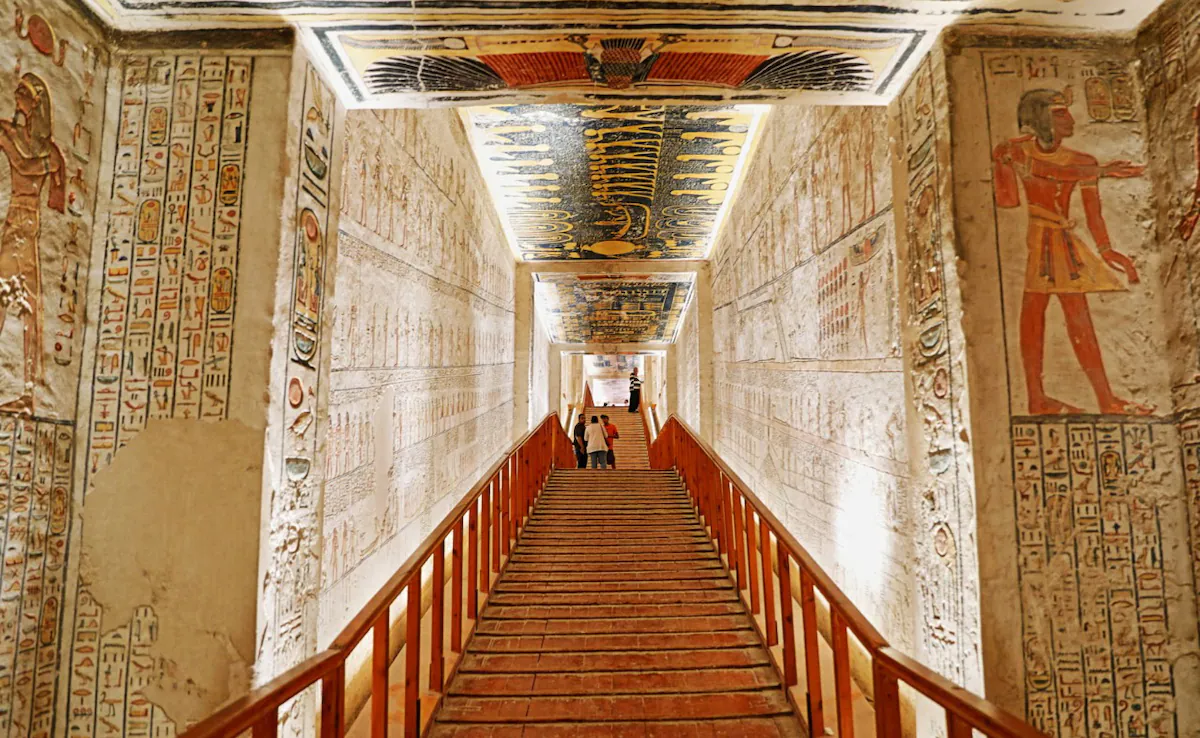
Tamil Brahmi inscriptions dating to the 1st–3rd century CE were discovered in six tombs of Egypt’s Theban Necropolis. The findings indicate ancient Indian–Roman trade and cultural links, with evidence of Tamil visitors in the Nile Valley.
Tamil Brahmi Inscriptions in Egypt:
| Dimension | Key Details |
|---|---|
| Location | Found in six tombs of the Theban Necropolis in the Nile Valley, Egypt |
| Script & Language | Inscriptions in Tamil Brahmi, Prakrit and Sanskrit |
| Chronology | Dated to 1st–3rd Century CE |
| Nature of Inscriptions | Names and short graffiti carved on tomb walls, corridors and entrances |
| Cultural Practice | Followed Greek tradition of leaving names in tombs |
| Origin of Visitors | Indians from north-western, western and southern regions, with majority from Tamilagam |
| Spatial Spread | Evidence of Indian movement beyond Red Sea ports into the Nile Valley |
| Key Name – Cikai Koṟṟaṉ | Appears eight times across five tombs; linked to Sanskrit śikhā and Tamil koṟṟam |
| Other Names Identified | Kopāṉ, Cātaṉ and Kiraṉ |
| Historical Linkages | References in Sangam corpus and similar inscriptions at Pugalur dated 2nd–3rd Century CE |
| Significance | Confirms Indo-Roman maritime trade, cultural continuity and Tamil overseas presence |