|
UPSC Marks 100 Years with Shatabdi Samaroh-Manthan
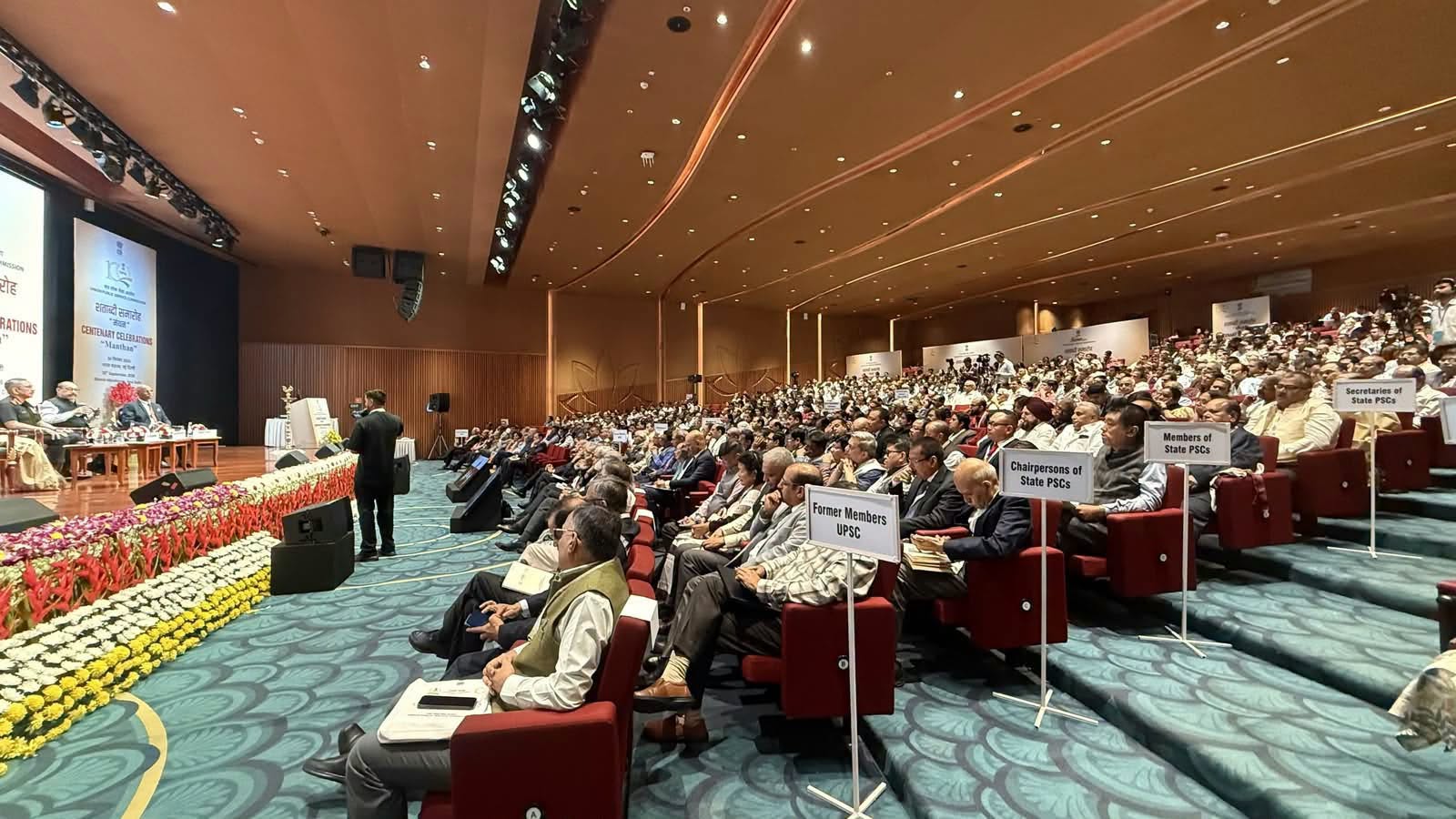
A 2-day national centenary celebration, titled Shatabdi Samaroh-Manthan, is organised at Bharat Mandapam, New Delhi (September 30-October 1, 2026), to commemorate 100 years of UPSC. During the event, the Prime Minister releases a UPSC Centenary Commemorative Coin, a commemorative postage stamp, and a compilation book titled "100 Landmark Judgements-Shaping the Policies of UPSC and Public Service Commissions in India".
UPSC Shatabdi Samaroh-Manthan and UPSC Constitutional Framework:
| Dimension | Key Details |
|---|---|
| Future Roadmap Pillars | The Commission frames its future operational roadmap around 3 pillars: Trust, Transparency, and Technology. |
| Pillar: Trust | Trust provides for upholding non-partisan integrity, constitutional neutrality, and meritocracy in civil recruitment. |
| Pillar: Transparency | Transparency provides for standardized grievance redressal systems, biometric authentication, and digital evaluation workflows. |
| Pillar: Technology | Technology provides for advanced AI-driven logistics, paperless administrative promotion committees, and digital infrastructure suited for Viksit Bharat. |
| Lee Commission | The Lee Commission (1924) recommends the immediate establishment of a statutory public service commission to eliminate political influence in civil service recruitment. |
| Formation Basis | The Commission is formed following recommendations from the Lee Commission under the Government of India Act, 1919. |
| Establishment (October 1, 1926) | The Commission is set up under the Public Service Commission (Functions) Rules, 1926, with Sir Ross Barker as its first Chairman and 4 members. |
| Reconstitution | The Federal Public Service Commission is reconstituted under the Government of India Act, 1935 with expanded responsibilities. |
| Constitutional Transition (January 26, 1950) | The Commission is renamed the Union Public Service Commission (UPSC) under Article 315 of the Indian Constitution as an independent constitutional body. |
| Article 315 | Article 315 mandates Public Service Commissions for the Union and individual States. |
| Article 316 | Article 316 provides for appointment by the President, with tenure of 6 years or until age 65. |
| Article 317 | Article 317 regulates removal only by Presidential order following a Supreme Court inquiry. |
| Article 319 | Article 319 provides for employment prohibition, Chairmen and Members are ineligible for future government employment to prevent bias. |
| Article 320 | Article 320 provides for core functions, UPSC conducts competitive examinations and is consulted on recruitment, promotions, and disciplinary matters. |
| Article 322 | Article 322 provides for financial independence, expenses and salaries are charged on the Consolidated Fund of India (non-votable). |
| Article 323 | Article 323 provides for annual reporting, UPSC requires an annual report to the President, and non-acceptance of advice requires explanation to Parliament. |