|
Union Government Revokes Sonam Wangchuk’s NSA Detention Amid Ladakh Autonomy Protests
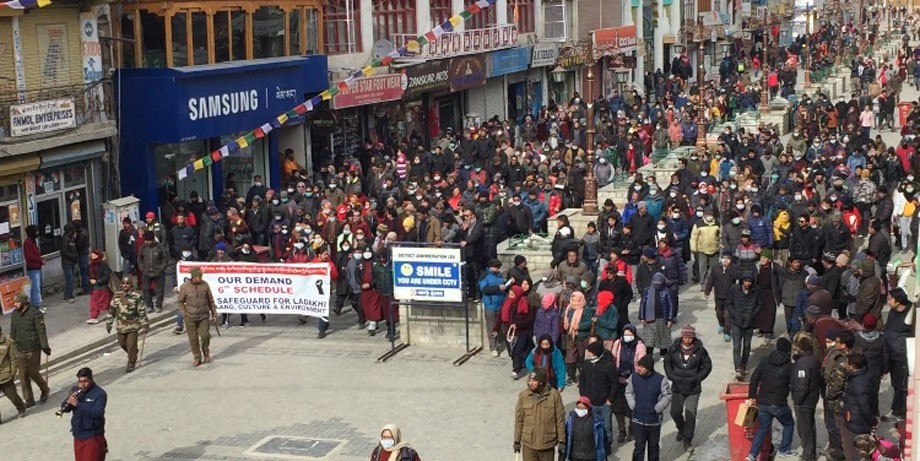
The Union government revoked the detention of activist Sonam Wangchuk under the National Security Act (NSA), amid ongoing demands in Ladakh for inclusion under the Sixth Schedule for greater autonomy and protection.
Sixth Schedule & Ladakh Demand :
| Aspect | Key Details |
|---|---|
| Constitutional Basis | Provided under Articles 244(2) and 275(1) of the Constitution. |
| Objective | Provides autonomous governance to protect tribal identity, land, customs and ensure self-governance. |
| Applicable Areas | Applies only to tribal areas in Assam, Meghalaya, Tripura and Mizoram. |
| Autonomous District Councils | Comprise 30 members including 26 elected and 4 nominated by the Governor. |
| Legislative Powers | Authority over land, forests (excluding reserved forests), customs, marriage and inheritance with Governor’s assent. |
| Judicial Powers | Village courts adjudicate disputes based on customary laws. |
| Financial Powers | Authority to levy taxes and collect land revenue. |
| Applicability of Laws | Parliament and State laws apply with modifications as determined by the councils. |
| Ladakh Demographic Basis | About 97% of the population comprises Scheduled Tribes. |
| Post-2019 Concerns | Concerns include land alienation, job competition and cultural dilution after changes in constitutional status. |
| Environmental Concern | Fragile Himalayan and glacial ecosystem requires local governance mechanisms. |
| Existing Governance in Ladakh | Union Territory without legislature; governed through Leh and Kargil Autonomous Hill Development Councils (statutory bodies). |
| Difference from Sixth Schedule | Existing Hill Councils lack constitutional status and do not have legislative and judicial powers like Autonomous District Councils. |
| Government Approach | Provides for reservation and domicile rules, Article 371-type safeguards, strengthening of Hill Councils and cultural protection measures. |