|
Election Commission Conducts First EVM–VVPAT Randomisation
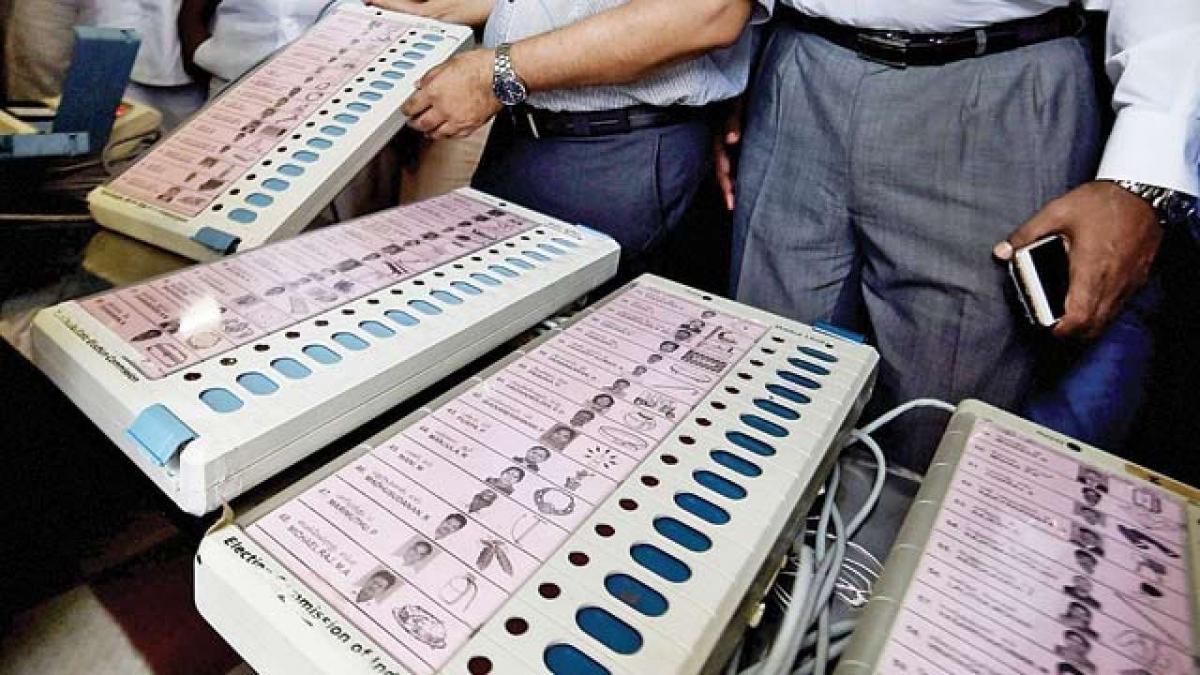
The first randomisation of EVM and VVPAT machines has been completed for Assembly Elections in Assam Kerala and Puducherry. The process is conducted by the Election Commission of India to ensure transparency and neutrality in elections.
EVM Randomisation and Electoral Process :
| Dimension | Key Details |
|---|---|
| EVM Randomisation | Digital process that randomly allocates EVMs and VVPATs to constituencies and polling stations |
| Purpose | Ensures free fair and transparent elections and prevents tampering bias or predetermined allocation |
| Conducting Authority | Election Commission of India conducts the randomisation process |
| Legal Basis | Based on Election Commission of India guidelines as a procedural safeguard |
| Constitutional Provision | Elections in India are conducted under Article 324 of the Constitution |
| Two Stage Randomisation | Comprises Stage 1 allocation from district warehouses to assembly constituencies and Stage 2 allocation from constituencies to polling stations |
| Electronic Voting Machine | Device that records and counts votes electronically replacing paper ballots |
| EVM Components | Comprises Ballot Unit for voter input and Control Unit operated by polling officials |
| VVPAT | Provides paper slip showing voter choice for verification before dropping into sealed box |
| VVPAT Display | Paper slip remains visible to the voter for 7 seconds |
| Introduction Timeline | EVM introduced in 1982 with nationwide use in 2004 and VVPAT introduced in 2013 with nationwide implementation in 2019 |
| First Level Checking | Only machines that pass checking by engineers of Bharat Electronics Limited and Electronics Corporation of India Limited are used |
| Digital System | Randomisation carried out using EVM Management System software |
| Transparency Measures | Process conducted in presence of political party representatives and allocation lists shared with parties and candidates |
| Storage and Security | Machines stored in strong rooms with sealed access CCTV surveillance Central Armed Police Forces security and monitoring by candidates or representatives |
| Counting Safeguard | VVPAT verification conducted in five randomly selected polling stations per constituency |