|
Union Budget 2026–27
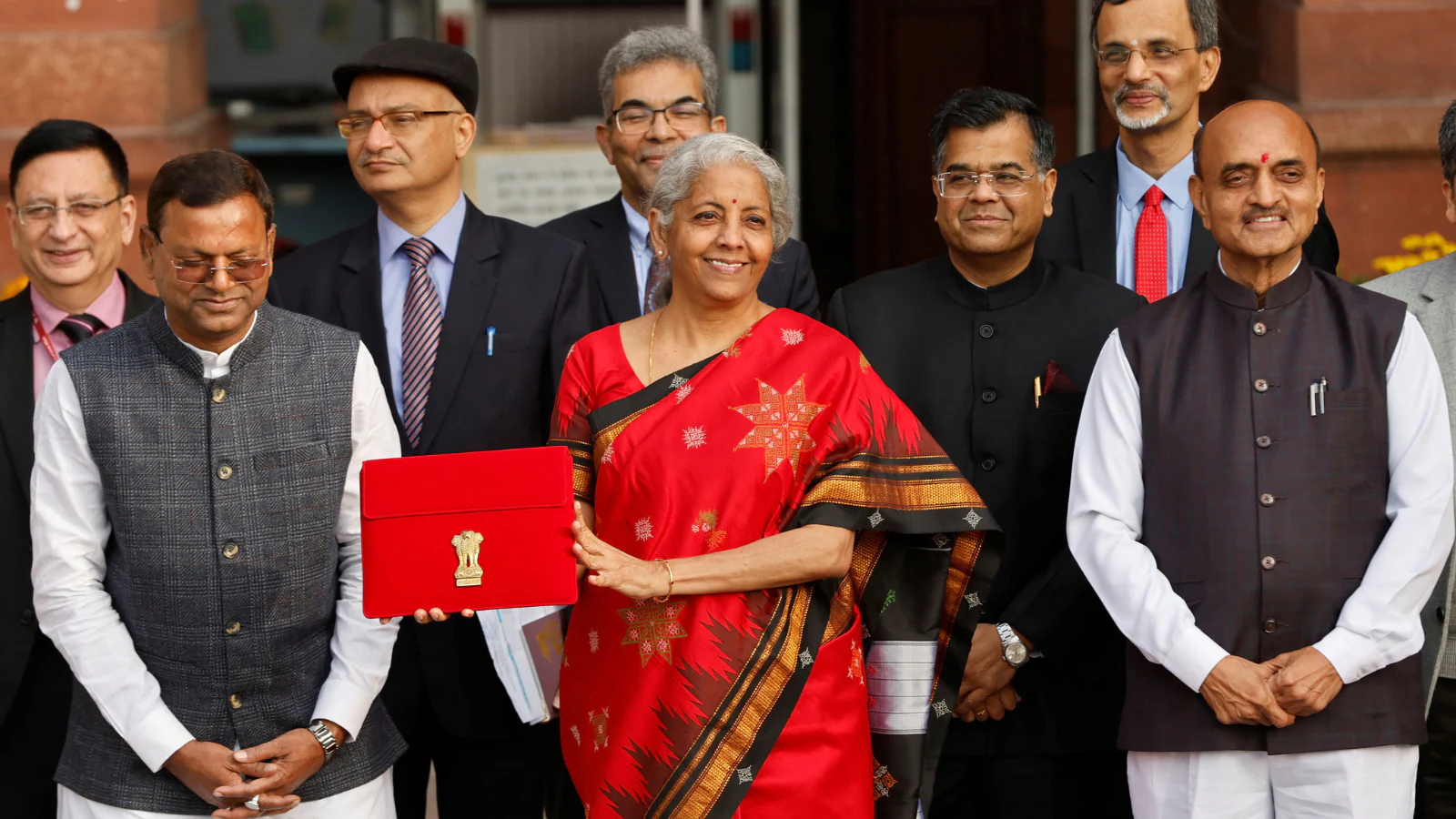
Union Budget 2026–27: presentation by Finance Minister Nirmala Sitharaman. Budget framework comprises growth and expenditure expectations, projected tax and non-tax revenues, and borrowing level for fiscal deficit; current-year data flag nominal GDP growth at 8%, tax buoyancy near 0.6, and private corporate investment below 2019 levels.
Union Budget 2026–27:
| Dimension | Key Details |
|---|---|
| Presenter | Nirmala Sitharaman |
| Core aspects of Budget | Government expectations for economic growth and planned spending across schemes and departments; projected revenues from tax and non-tax sources; borrowing level for bridging the gap between income and expenditure (fiscal deficit) |
| Fiscal deficit | Gap between income and expenditure; borrowing level for bridging the gap |
| Constraints on annual Budget changes | Expenditures and policy continuity; salaries, pensions, and many subsidies not easily altered year to year; tax rates not frequently changed; choices shaped by ongoing-year government finances |
| Carry-over stresses | Exports hit by US tariffs |
| Relevance for Budget-making | Nominal GDP as base for calculating tax revenues, spending plans, and borrowing needs |
| Nominal GDP growth: current-year | Expected growth at 8% |
| Nominal GDP growth: in last year’s | Assumed at 10.1% |
| First Advance Estimates | Peg nominal GDP growth at 8% |
| Tax buoyancy | Measures tax-revenue response to economic growth; buoyancy of 1 corresponds to tax collections rising in line with GDP |
| Assumed vs actual | Budget assumed tax buoyancy at 1.1; actual buoyancy closer to 0.6 |
| Tax collections performance | Actual tax collections lagging Budget assumptions across categories; year-to-date tax growth trailing targets and below nominal GDP growth rate (around 8%) |
| Private sector policy framing | Idea of “Minimum Government” |
| Measures since 2019 | Sharp corporate tax cuts, higher public capital expenditure, and targeted incentives such as the Production Linked Incentive (PLI) scheme |
| Later demand-side measures | Raising income tax exemptions and cutting GST rates |
| Private corporate investment | Below pre-pandemic (2019) levels |
| Reason for weak investment response | Sales growth not strong enough for fresh capacity creation |
| Foreign investor positioning | Reduced exposure to India; pressure on the rupee |