|
Scramjet Engine Milestone Supports Indigenous Hypersonic Cruise Missile Development Programme
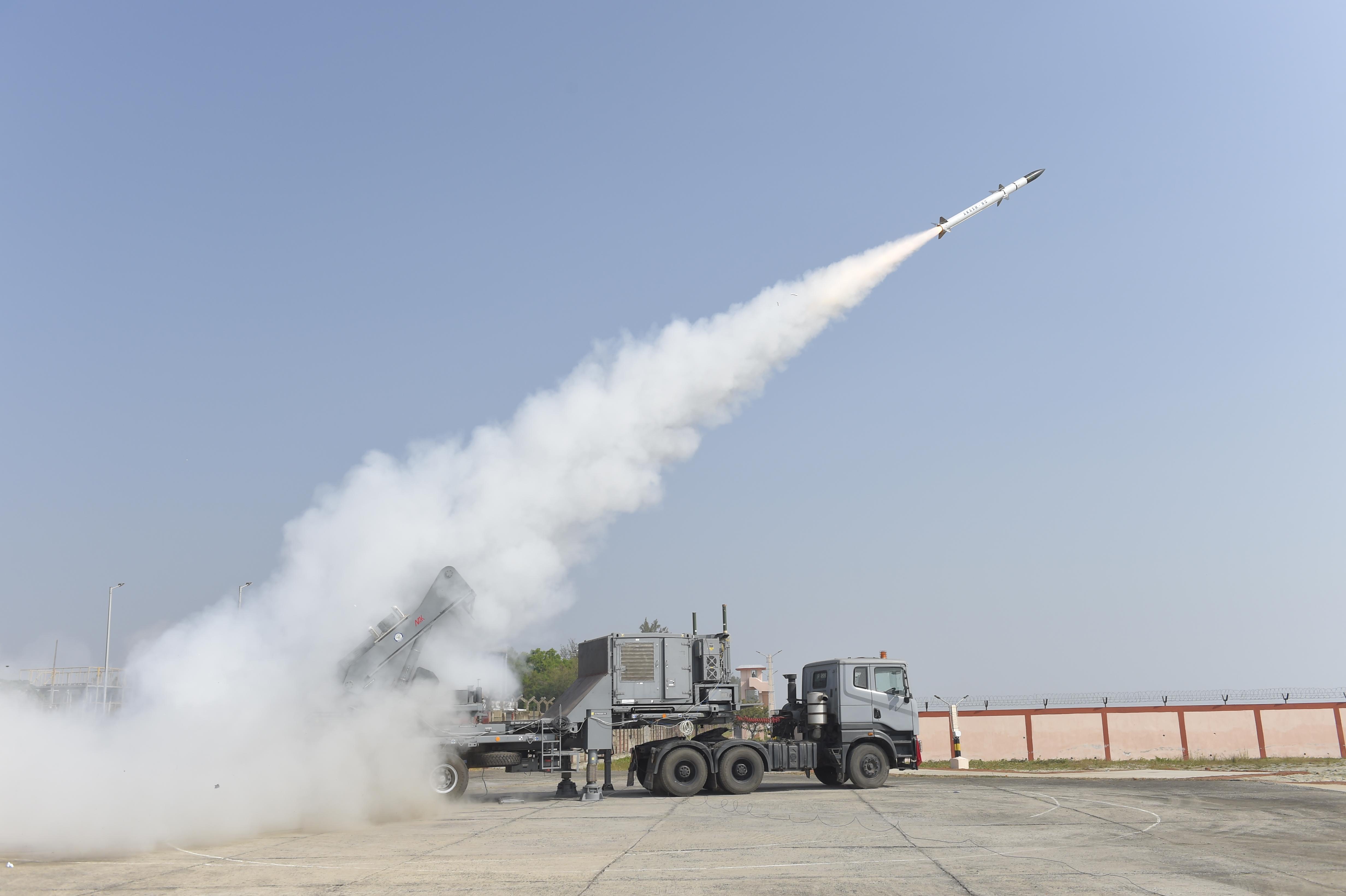
DRDO’s Defence Research and Development Laboratory (DRDL) successfully ground-tested a full-scale, actively cooled, long-duration scramjet engine. The Actively Cooled Scramjet Full Scale Combustor operates for over 12 minutes, providing a foundational success for the indigenous Hypersonic Cruise Missile Development Program.
Scramjet Engine Ground Test & Hypersonic Weapons :
| Dimension | Key Details |
|---|---|
| Testing authority | Ground-test is conducted by DRDO’s Defence Research and Development Laboratory (DRDL). |
| Tested system | Full-scale, actively cooled, long-duration scramjet engine is ground-tested successfully. |
| Combustor detail and duration | Actively Cooled Scramjet Full Scale Combustor operates successfully for a duration exceeding 12 minutes. |
| Programme linkage | Scramjet engine test provides a foundational success for the indigenous Hypersonic Cruise Missile Development Program. |
| Scramjet meaning | Scramjet stands for Supersonic Combustion Ramjet. |
| Scramjet vs ramjet | Scramjet is an improvement over the ramjet engine. |
| Ramjet definition | Ramjet comprises an air-breathing jet engine that uses the vehicle’s forward motion to compress incoming air for combustion without a rotating compressor. |
| Thrust at zero air speed | Both ramjets and scramjets cannot produce thrust at zero air speed and depend on assisted take off. |
| Efficiency feature | Scramjets are lighter and more fuel-efficient than conventional rockets, enabling longer ranges. |
| Nations with scramjet tests | India is part of an elite club of nations that have successfully tested scramjet engines; others USA, Russia, China, etc. |
| Hypersonic weapons speed threshold | Hypersonic weapons are capable of speeds exceeding Mach 5 (>6,100 km/hr). |
| Hypersonic weapons: operational characteristics | Rapid global reach and high evasion capabilities against air defence systems. |
| Flight altitude comparison | Fly at lower altitudes than ballistic missiles, making them harder to track. |
| Types of hypersonic weapons | Hypersonic Glide Vehicles (HGV) and Hypersonic Cruise Missiles (HCM). |
| Hypersonic Glide Vehicles (HGV) | HGV are launched from a rocket, similar to regular ballistic missiles, before gliding to a target. |
| Hypersonic Cruise Missiles (HCM) | HCM are self-propelled and precision-guided cruise missiles; it maintains sustained and controlled flight to strike targets accurately. |