|
Samagra Shiksha 3.0 to Align School Education Reforms with NEP 2020 Implementation
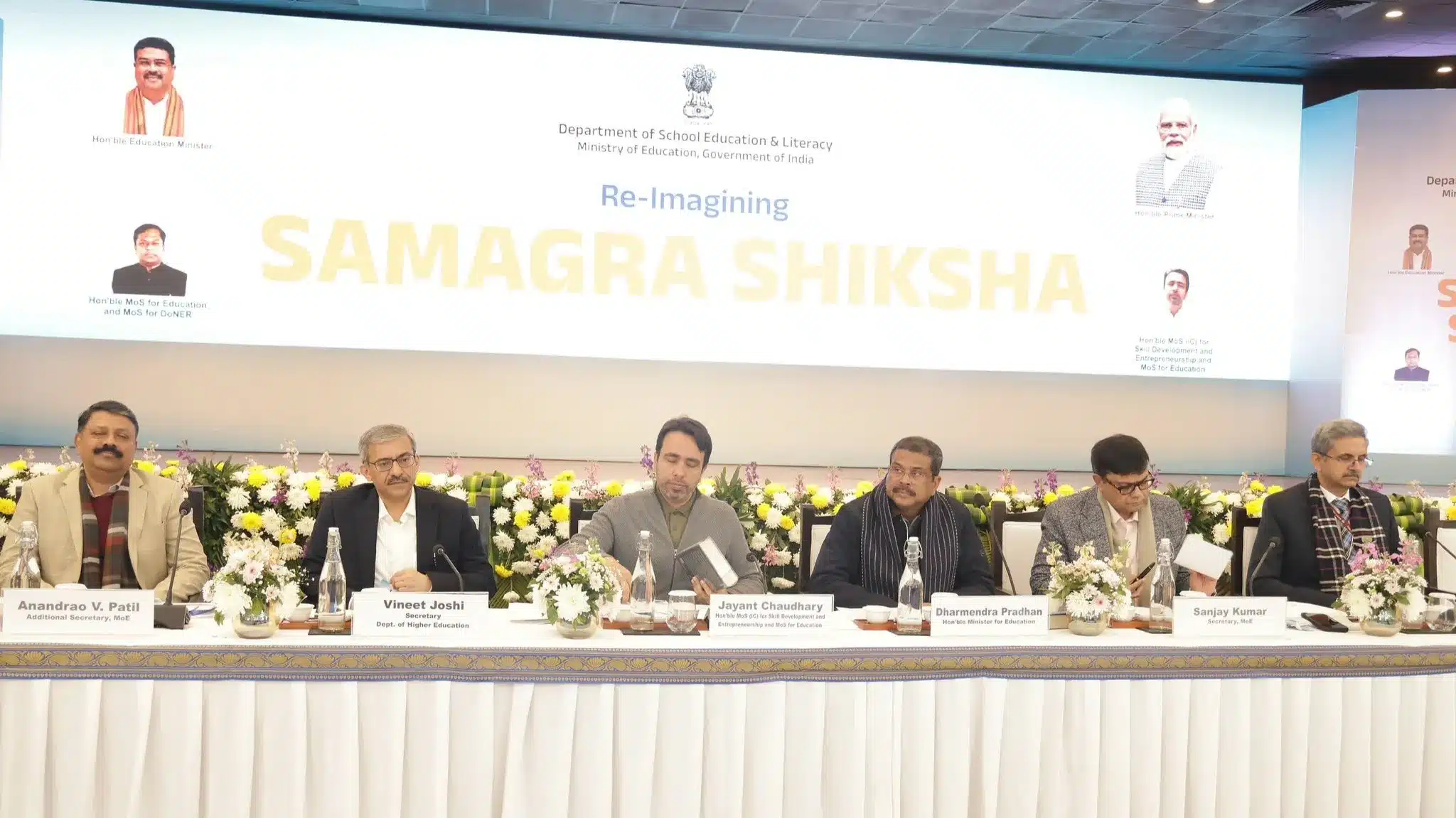
The Union government initiates nationwide consultations with States and stakeholders to chart a roadmap for Samagra Shiksha 3.0 for the 2026-27 academic cycle. A high-level consultation in New Delhi brings together State Education Secretaries, State Project Directors, central ministries, and education experts to deliberate on the next phase aligned with NEP 2020 implementation.
Samagra Shiksha 3.0 (Samagra Shiksha Scheme)
| Dimension | Key Details |
|---|---|
| Scheme nature | Integrated, centrally sponsored scheme for school education. |
| Coverage | Entire continuum from pre-primary to senior secondary level. |
| Launch and subsumption | Launched in 2018 by subsuming Sarva Shiksha Abhiyan, Rashtriya Madhyamik Shiksha Abhiyan, and Teacher Education schemes. |
| Alignment | Samagra Shiksha 3.0 provides for alignment with 5 years of NEP 2020 implementation and India’s long-term vision of Viksit Bharat by 2047. |
| Core objectives | Provides for universal enrolment up to Class XII; reduction in dropout rates; improvement in foundational and grade-level learning outcomes; strengthening teacher capacity and school leadership; ensuring equity for socio-economically disadvantaged groups. |
| Key focus areas | Comprises access and infrastructure; quality of learning (age-appropriate learning benchmarks, curriculum equivalence across boards, competency-based assessments); teacher capacity building (continuous professional development, pedagogical reforms, leadership training); digital education (technology, digital platforms, Artificial Intelligence in classrooms); equity and inclusion. |
| Equity and inclusion coverage | Support for girls, children with disabilities, SC/ST students, and aspirational districts. |
| Governance and planning approach | Mandates emphasis on consultative, bottom-up planning; States and Union Territories are encouraged to prepare robust annual plans grounded in local school realities while aligning with national priorities. |
| Convergence mechanism | Convergence among Ministries, States, and civil society to improve implementation efficiency. |
| Consultation participants | State Education Secretaries, State Project Directors, central ministries, and education experts. |
| Key themes of deliberation | Bridging learning gaps exacerbated by pandemic disruptions; improving nutrition and learning outcomes simultaneously; integrating vocational education and skilling pathways within schools; leveraging digital tools and Artificial Intelligence for personalised learning; making schools active agents of social and economic transformation. |
| Outcome-oriented vision | Provides for being globally competitive while remaining rooted in Indian values; responsiveness to diverse student needs across regions; being outcome-driven with measurable improvements in learning indicators; encouraging community participation in school governance. |
| Road ahead | States are urged to treat the 2026-27 planning cycle as a national movement rather than a routine administrative exercise. |