|
RBI’s Special USD-INR Forex Swap Facility Draws $143.5 Billion Inflows
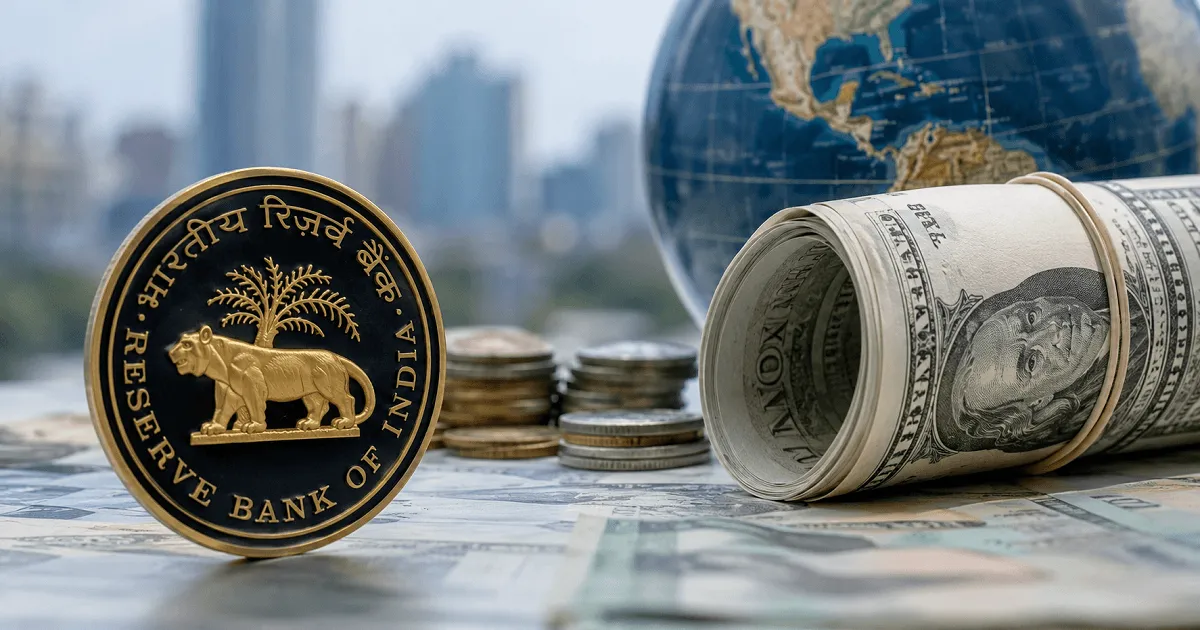
RBI states that its special US dollar-Indian rupee (USD-INR) forex swap facility receives forex inflows of over $143.5 billion till September 18, 2026. The facility covers FCNR(B) deposits, ECBs, and OFCBs, and is used to boost dollar inflows amid a weakening rupee.
RBI Special USD-INR Forex Swap Facility:
| Dimension | Key Details |
|---|---|
| Authority | The facility is introduced by the Reserve Bank of India (RBI). |
| Coverage | It covers Foreign Currency Non-Resident (Bank) FCNR(B) deposits, External Commercial Borrowings (ECBs), and Overseas Foreign Currency Borrowings (OFCBs). |
| Reason to launch | It is introduced to boost the inflow of dollars amid a weakening rupee. |
| Stated objectives | It provides for increasing foreign exchange inflows, supporting the rupee during a period of pressure, and strengthening India's external-sector position. |
| Composition of inflows | Inflows comprise FCNR(B) deposits of $132.98 billion, OFCBs of $5.32 billion, and ECBs of $5.29 billion. |
| Benefit for banks | It provides banks with a stable source of medium-term foreign currency funding when lenders have been facing elevated credit-deposit ratios. |
| FCNR(B) deposits | FCNR(B) comprises foreign currency deposits maintained by Non-Resident Indians (NRIs) with Indian banks, and depositors are protected from exchange-rate risk because deposits are held in foreign currency. |
| External Commercial Borrowings | ECBs comprise loans raised by eligible Indian entities from foreign lenders, and it is used to access international capital at potentially lower costs. |
| Overseas Foreign Currency Borrowings | OFCBs comprise foreign-currency borrowings raised by banks or institutions from overseas sources. |