|
Nilgiri Tahr Conservation Status
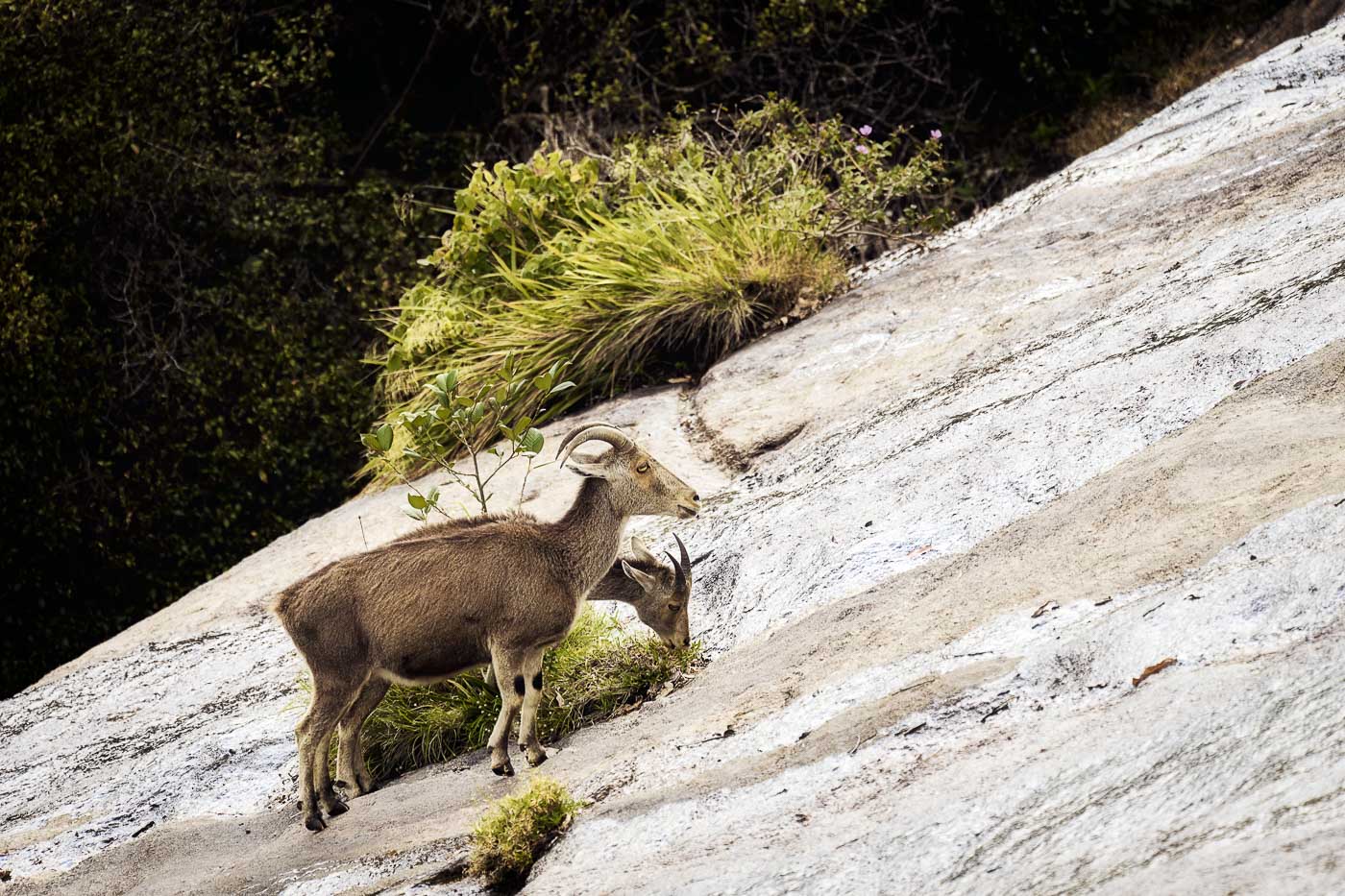
The Tamil Nadu Forest Department has commenced the third synchronised survey of the Nilgiri Tahr. The survey is currently relevant for monitoring an endangered mountain ungulate endemic to the southern Western Ghats.
Nilgiri Tahr:
| Dimension | Key Details |
|---|---|
| Species Type | The Nilgiri Tahr is a mountain ungulate endemic to the southern part of the Western Ghats. |
| Other Names | The Nilgiri Tahr is also known as Nilgiri Ibex or Ibex and is locally called Varayaadu. |
| Unique Feature | The Nilgiri Tahr is the only mountain ungulate in southern India. |
| Habitat | The species inhabits open montane grasslands of the southwestern ghats montane rain forests ecoregion. |
| Elevation Range | The species occurs at elevations ranging from 1,200 m to 2,600 m. |
| Sholas | Sholas are pockets of stunted forests interspersed with grasslands at higher elevations. |
| Distribution | The species is found across a roughly 400 km stretch of the Western Ghats in Kerala and Tamil Nadu. |
| Largest Population | Eravikulam National Park in Kerala has the highest density and largest surviving population of Nilgiri Tahr. |
| Physical Features | The species has a stocky body, short coarse fur, bristly mane, and curved horns in both sexes. |
| Sexual Dimorphism | Males are larger than females, darker when mature, and have larger horns. |
| IUCN Status | The Nilgiri Tahr is listed as Endangered under the IUCN Red List. |
| Legal Protection | The Nilgiri Tahr is listed under Schedule I of the Wildlife Protection Act, 1972. |
| Threats | Threats comprise habitat loss due to deforestation, competition with domestic livestock, hydroelectric projects, and monoculture plantations. |