|
National Science Day 2026
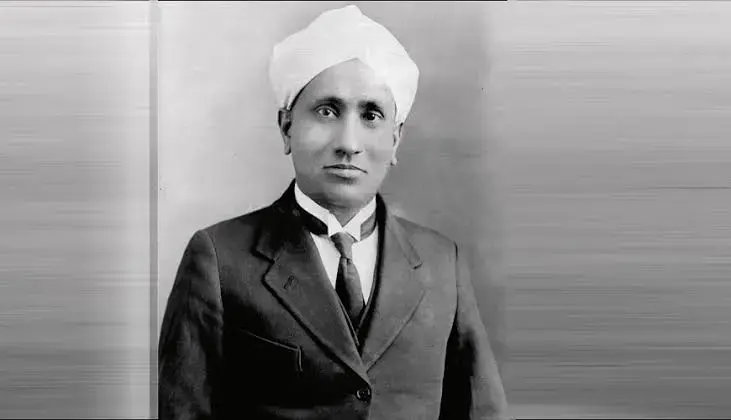
National Science Day 2026 was observed on 28 February to commemorate C.V. Raman’s discovery of the Raman Effect. The event highlighted recent scientific achievements and contributions of women in science.
National Science Day and Raman Effect:
| Dimension | Key Details |
|---|---|
| National Science Day | Observed every year on 28 February to commemorate the discovery of the Raman Effect |
| Designation | Designated in 1986 by the Government of India |
| Discovery | Raman Effect discovered on 28 February 1928 by Sir Chandrasekhara Venkata Raman |
| Nobel Recognition | Discovery earned the Nobel Prize in Physics in 1930 |
| Raman Effect | Change in wavelength of light when it passes through a material and is scattered by its molecules |
| Nodal Authority | Department of Science and Technology under the Ministry of Science and Technology conducts activities related to National Science Day |
| Purpose | Promotes science communication activities and encourages scientific inquiry and collaboration |
| Theme 2026 | Women in Science Catalysing Viksit Bharat |
| Global Innovation Standing | India ranked 38th in Global Innovation Index 2025 and sixth worldwide in intellectual property filings according to WIPO |
| Network Readiness Index | India improved its position in the Network Readiness Index |
| ISRO Achievements | Over 200 achievements in 2025 including Space Docking Experiment SpaDeX with two satellites in orbit |
| Launch Infrastructure | Completed 100th launch from Satish Dhawan Space Centre and approved a third launch pad for Gaganyaan and future missions |
| Space Missions | Aditya L1 provided solar data and astronaut Shubhanshu Shukla returned after an 18 day ISS mission |
| Semiconductor and Computing Initiatives | DHRUV64 indigenous 64 bit microprocessor developed by C DAC and Vikram 3201 processor developed by ISRO for space missions |
| Semiconductor Mission | India Semiconductor Mission supports development of domestic chip manufacturing |
| Supercomputing Mission | National Supercomputing Mission expanded high performance computing systems for research in climate drugs and materials |
| Artificial Intelligence Applications | AI tools include monsoon forecast messaging for farmers MadhuNetrAI for diabetic eye disease detection and BharatGen multilingual AI model |
| Quantum Computing | QpiAI Indus 25 qubit quantum computer launched by Bengaluru startup QpiAI and later introduction of the 64 qubit Kaveri processor |
| Research and Innovation Funding | Research Development and Innovation scheme approved with one lakh crore rupees to support private investment in science |
| Science Outreach | Activities include student competitions mobile science vans and the INSPIRE MANAK programme |