|
Kerala Western Ghats: Study flags photo tourism threat to galaxy frog Melanobatrachus indicus
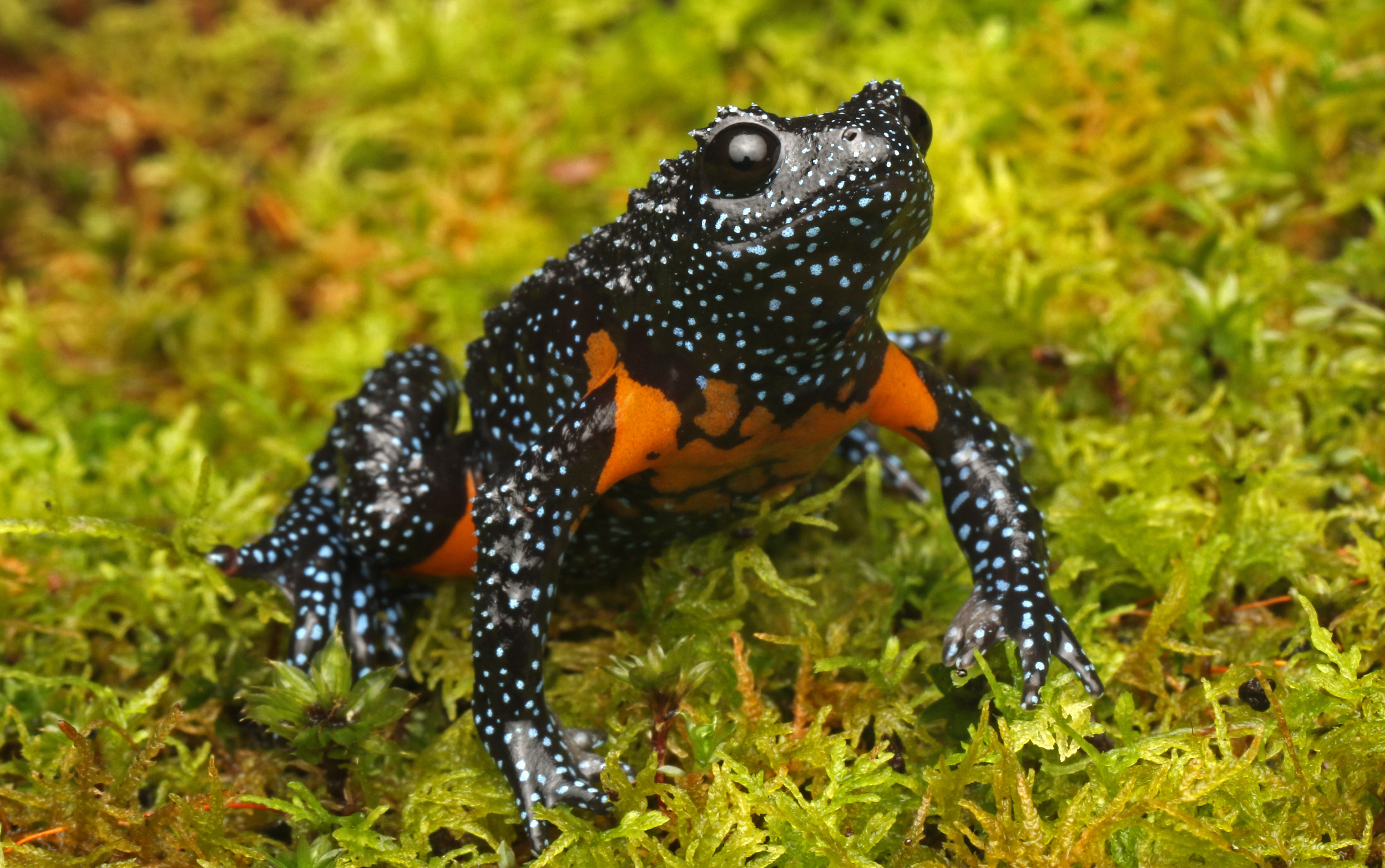
A study reports that seven galaxy frogs vanished and are likely dead after multiple photographers descended on their habitat, causing disturbance and behavioural changes. The photo tourism disturbance as a threat to the galaxy frog in Kerala’s Western Ghats.
Galaxy Frog (Melanobatrachus indicus) -
| Dimension | Key Details |
|---|---|
| Scientific name | Melanobatrachus indicus |
| Family | Microhylidae |
| Discovery | First discovered in 1878 |
| Distribution | Endemic to the Western Ghats, Kerala (India) |
| Habitat and location features | Found primarily under rotting logs, leaf litter, rocks, and other moist ground cover within 10 m of streams or in swampy areas |
| Forest type and elevation | Found in moist evergreen forests at elevations around 1,000–1,500 m; restricted to small forest patches in the southern Western Ghats |
| Ecological needs | Requires precise temperature and humidity to survive; described as cold-blooded and highly sensitive |
| Size | About 2-3.5 cm |
| Appearance | Glossy black skin with blue-white speckles (galaxy-like) and orange streaks on limbs |
| Unique trait | Uses spots to communicate; existing data about population and breeding behaviour is described as deficient |
| Behaviour | Primarily nocturnal; does not produce calls |
| Threat response | Exhibits “contraction” behaviour by arching the back and keeping limbs close to the body when threatened |
| EDGE status | Only species in its genus; listed as an Evolutionarily Distinct and Globally Endangered (EDGE) species |
| IUCN status | Vulnerable |
| Threats | Habitat loss due to deforestation and agriculture; disturbance from photo tourism |
| Current trigger | A group of seven galaxy frogs vanished and are likely dead after multiple photographers descended on their habitat, causing disturbances and behavioural changes |