|
Iran’s Islamic Revolutionary Guard Corps
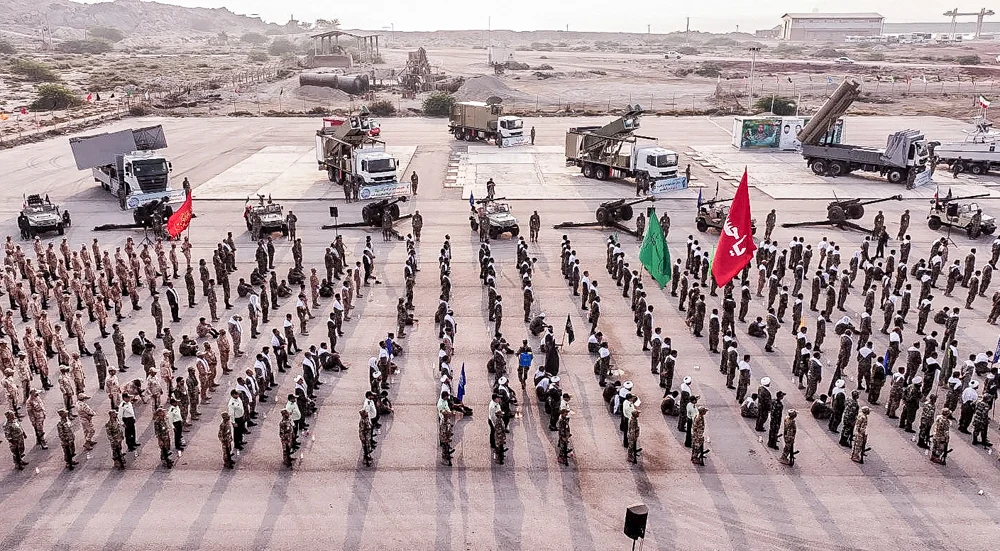
The Islamic Revolutionary Guard Corps (IRGC), also known as Sepah-e-Pasdaran, was established after Iran’s 1979 Islamic Revolution to protect the revolutionary system and ensure loyalty to the clerical leadership.
Islamic Revolutionary Guard Corps (IRGC):
| Dimension | Key Details |
|---|---|
| Full Name | Islamic Revolutionary Guard Corps (IRGC), also known as Sepah-e-Pasdaran. |
| Founder | Established by Ayatollah Ruhollah Khomeini. |
| Year of Creation | Formed in 1979 after the Iranian Islamic Revolution. |
| Historical Context | Created after the revolution that overthrew the monarchy of Shah Mohammad Reza Pahlavi. |
| Reason for Formation | Revolutionary leaders distrusted the regular army and sought a force loyal to the new clerical leadership. |
| Primary Aim | To protect the Islamic Revolution and preserve the theocratic constitutional system established after the revolution. |
| Ideological Role | Khomeini described the Guards as “soldiers of Islam” responsible for safeguarding the revolutionary government. |
| Impact of Iran–Iraq War | The Iran–Iraq War (1980–1988) strengthened the IRGC and transformed it into a powerful military institution. |
| Dual Military Structure | Iran maintains two parallel military forces: the IRGC and the regular army known as Artesh. |
| Role of Artesh | Responsible mainly for protecting territorial integrity and maintaining internal order. |
| Role of IRGC | Focused on protecting the revolutionary regime and influencing foreign and security policy. |
| Command Authority | The IRGC operates under the direct authority of the Supreme Leader of Iran. |
| Ground Forces | Deployed across Iran’s 31 provinces to maintain internal stability and security. |
| Aerospace Force | Responsible for Iran’s missile and drone programmes. |
| Navy | Patrols maritime borders including the Strait of Hormuz, a critical global energy route. |
| Basij | A volunteer paramilitary organization used for internal security, social control and mobilization. |
| Quds Force | The elite overseas operations unit responsible for unconventional warfare and regional influence. |
| Axis of Resistance | A network of allied groups supported by the IRGC to counter Western and Israeli influence in West Asia. |
| Key Associated Groups | Includes Hezbollah in Lebanon, Hamas and Islamic Jihad in Palestine, the Houthis in Yemen and Shia militias in Iraq and Syria. |