|
IAF’s Soviet-origin Pechora Surface-to-Air Missile System Modernised Under Indigenous Push
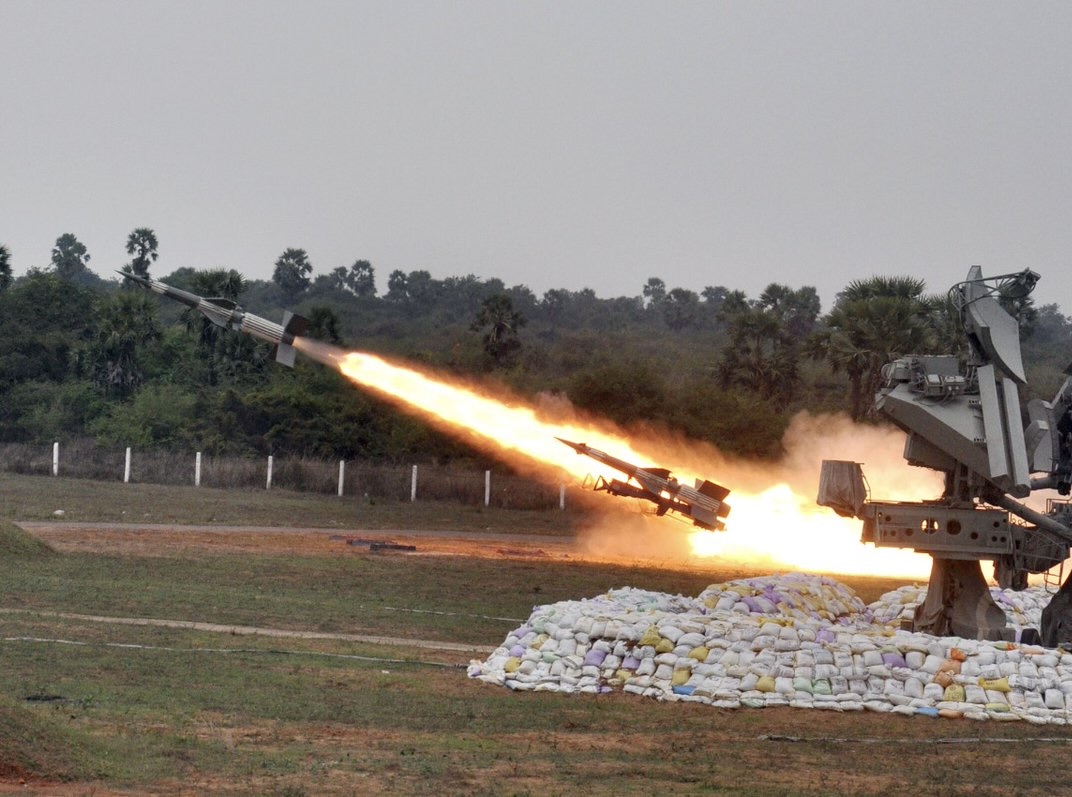
Bengaluru-based Alpha Design Technologies Ltd (ADTL) completes an upgrade of the Indian Air Force’s Pechora surface-to-air missile (SAM) system. The upgrade aligns with the Centre’s push to modernise ageing military hardware through indigenous capability.
S-125 Neva/Pechora (Pechora) Surface-to-Air Missile System
| Dimension | Key Details |
|---|---|
| Official name | Officially known as the S-125 Neva/Pechora. |
| Origin and type | Soviet-origin, medium-range surface-to-air missile (SAM) system. |
| Target profile | Designed to intercept low- to medium-altitude targets. |
| System components | Radar-guided missile launcher and a fire control unit; typically employs the V-600 missile. |
| Radar used | Uses the 4R90 Yatagan radar, equipped with five parabolic antennas, to detect, track, and lock onto targets. |
| Engagement capability | Capable of launching missiles to intercept and destroy targets mid-air after threat identification. |
| Effective target types | Particularly effective against slow-moving or low-flying targets; well-suited for countering drones and cruise missiles. |
| Deployment mode | Operating independently or as part of a larger, integrated air defence network. |
| Electronic warfare environment | Functioning in environments with heavy electronic jamming. |
| Operational firing range | Provides for an operational firing range of up to 30–35.4 km; some upgraded versions reach 35.4 km. |
| Engagement altitude | Capable of engaging targets from as low as 20 meters up to 20–25 km. |
| Detection range | Radar can detect targets up to 100 km away. |
| Accuracy and simultaneous engagement | Provides for a kill probability of around 92%; capable of engaging up to two targets simultaneously at speeds up to 900 m/s. |