|
Economic Survey 2025-26
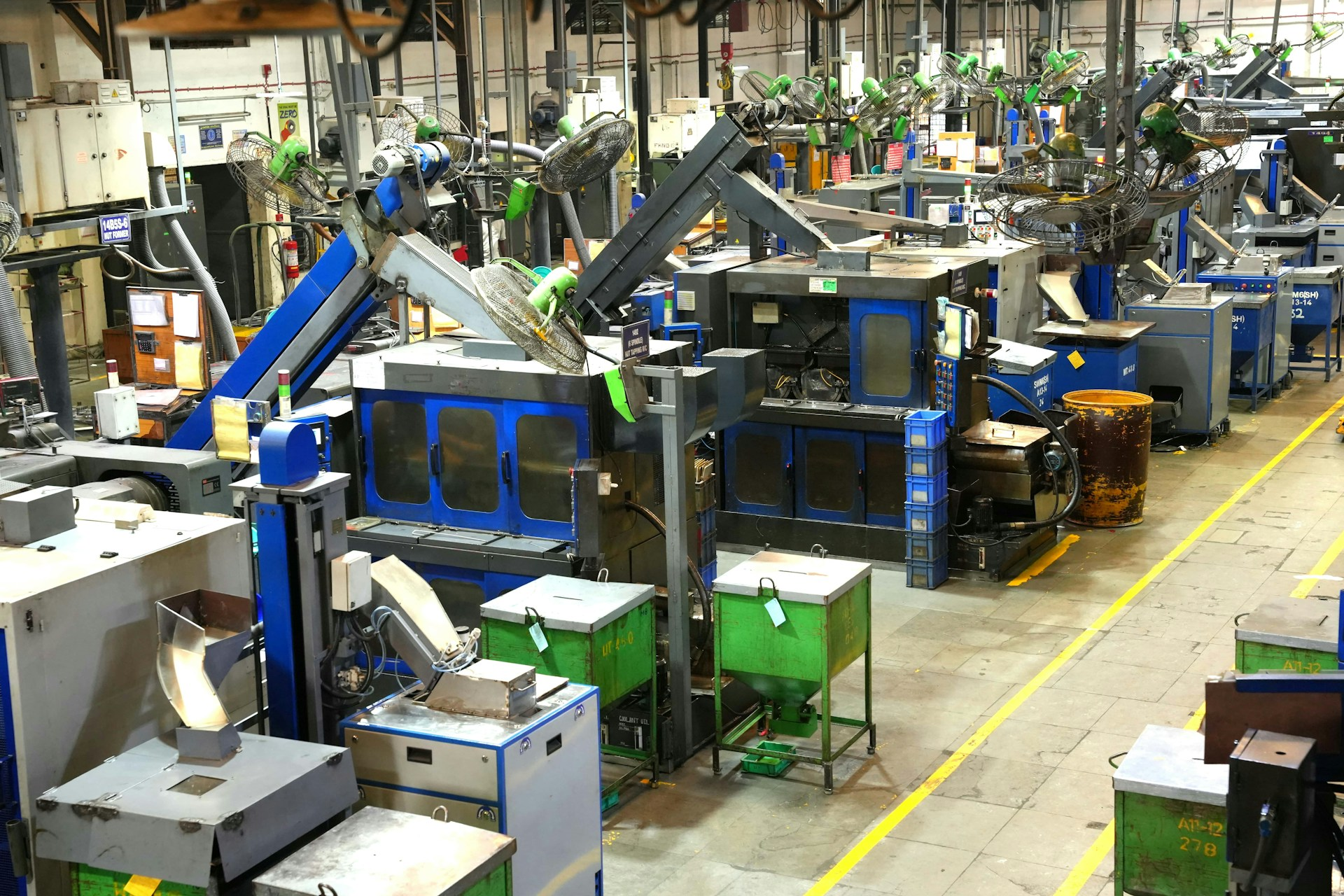
NITI Aayog has released the first volume of a study titled “Key Sectors to Position India as a Global Manufacturing Hub”, outlining priority manufacturing sectors and recommendations. The Economic Survey 2025-26 presents the latest national accounts-based snapshot of manufacturing and the broader secondary sector in India’s GVA, output, and employment.
Manufacturing Sector: Economic Survey 2025-26 and NITI Aayog Study :
| Dimension | Key Details |
|---|---|
| Report focus | The study provides for a structured, data-driven framework to identify manufacturing sectors for India’s global leadership by 2047. |
| Shortlisted sectors (12) | The study comprises 12 shortlisted sectors: 1. electronics, 2. telecommunications equipment, 3. solar photovoltaic, 4. pharmaceuticals, 5. chemicals, 6. automotive, 7. defence and drones, 8. steel, 9. capital goods, 10. textiles, 11. food processing, and 12. leather and footwear. |
| Opening volume coverage | The opening volume comprises in-depth examination of 4 sectors: 1. chemicals, 2. textiles, 3. telecom and network equipment, and 4. solar photovoltaic. |
| Methodology | The study comprises four phases: shortlisting sectors based on market size and growth prospects; three-pronged assessment of market potential, competitiveness, and strategic relevance; benchmarking best practices from top-performing manufacturing countries; developing sector-specific recommendations and a roadmap. |
| Assessment factors | The assessment comprises consideration of market potential, infrastructure readiness, policy support, raw material availability, technology readiness, employment potential, and India’s current position in the value chain. |
| Cross-cutting recommendations | The report provides for recommendations across examined sectors: cluster-based manufacturing with integrated industrial parks offering shared utilities, infrastructure, and efficient approvals; targeted incentives and viability gap funding to reduce import dependency; deeper domestic value addition; joint ventures and technology transfer; skilling and technology adoption to raise labour productivity; export-market diversification while negotiating balanced free trade agreements. |
| Chemicals sector structure | The domestic chemicals industry comprises three consumption segments: petrochemicals and organic chemicals, specialty chemicals, and inorganic chemicals. |
| Chemicals: priority products | The report identifies phenol, methanol, and acetic acid as priority products for import substitution. |
| Textiles: key quantitative indicators | The textile and apparel sector comprises the following indicators in the report: approximately 2% contribution to national GDP; 11% of manufacturing GVA; 9% of merchandise exports; support to more than 45 million people; USD 37.7 billion textile exports in fiscal 2025; 4.1% of global textile and apparel exports, with India as the sixth-largest exporter. |
| Textiles: labour productivity and workforce measures | The report provides for skilling through apprenticeships and industry-academia partnerships, safe and affordable accommodation for migrant workers near clusters, and voluntary certification for firms demonstrating ethical labour practices. |
| Telecom market snapshot | India comprises the world’s second-largest telecommunications market with more than 1.2 billion subscribers, approximately 85% telecom penetration, and nearly 75% internet usage. |
| National Telecom Policy 2025 targets | The National Telecom Policy 2025 mandates targets by 2030: doubling the sector’s contribution to GDP; doubling exports of telecom products and services; creating one million new jobs; and significantly increasing investment and R&D expenditure. |
| Telecom: priorities | The report provides for priorities including deepening localisation, strengthening domestic component manufacturing, promoting joint ventures and technology transfer, developing integrated industrial clusters, and strengthening testing, certification, and skill development. |
| Solar capacity and target linkage | India has installed 106 GW of solar capacity by March 2025 and needs to add about 174 GW to meet the 2030 target of 280 GW. |
| Solar PV market size and growth | The domestic PV market comprises an estimate of ₹32,400 crore ($3.7 billion) and is expected to grow at a 17-20% CAGR between fiscal 2023 and fiscal 2030. |
| Solar exports concentration | The US comprises 97% of India’s solar module exports between 2019-20 and 2025-26, as per the report. |
| Solar: supply chain and export-base recommendations | The report provides for moving upstream into polysilicon and wafers and broadening the export base. |
| Manufacturing share in GVA | Manufacturing’s share in India’s GVA comprises around 17-18% in real terms, as per the Economic Survey 2025-26. |
| Manufacturing share in real GDP | Manufacturing’s share of real GDP comprises a relatively steady trend despite fluctuations in its nominal share, as per the Economic Survey 2025-26. |
| Manufacturing GVO | Manufacturing’s gross value of output (GVO) comprises around 38%, as per the Economic Survey 2025-26. |
| National accounts: secondary sector composition | The broader secondary sector comprises manufacturing, construction, electricity, gas, water supply, and related utilities. |
| National accounts: secondary sector share and growth | The secondary sector accounts for 25.8% of India’s GVA in 2024-25 and grows by 8.0% in real terms during the year. |
| Employment: manufacturing share | MoSPI’s Sustainable Development Goals indicator framework shows manufacturing comprises 11.44% of total employment in 2023-24, compared with 12.13% in 2017-18. |