|
Dibru-Saikhowa National Park, Assam
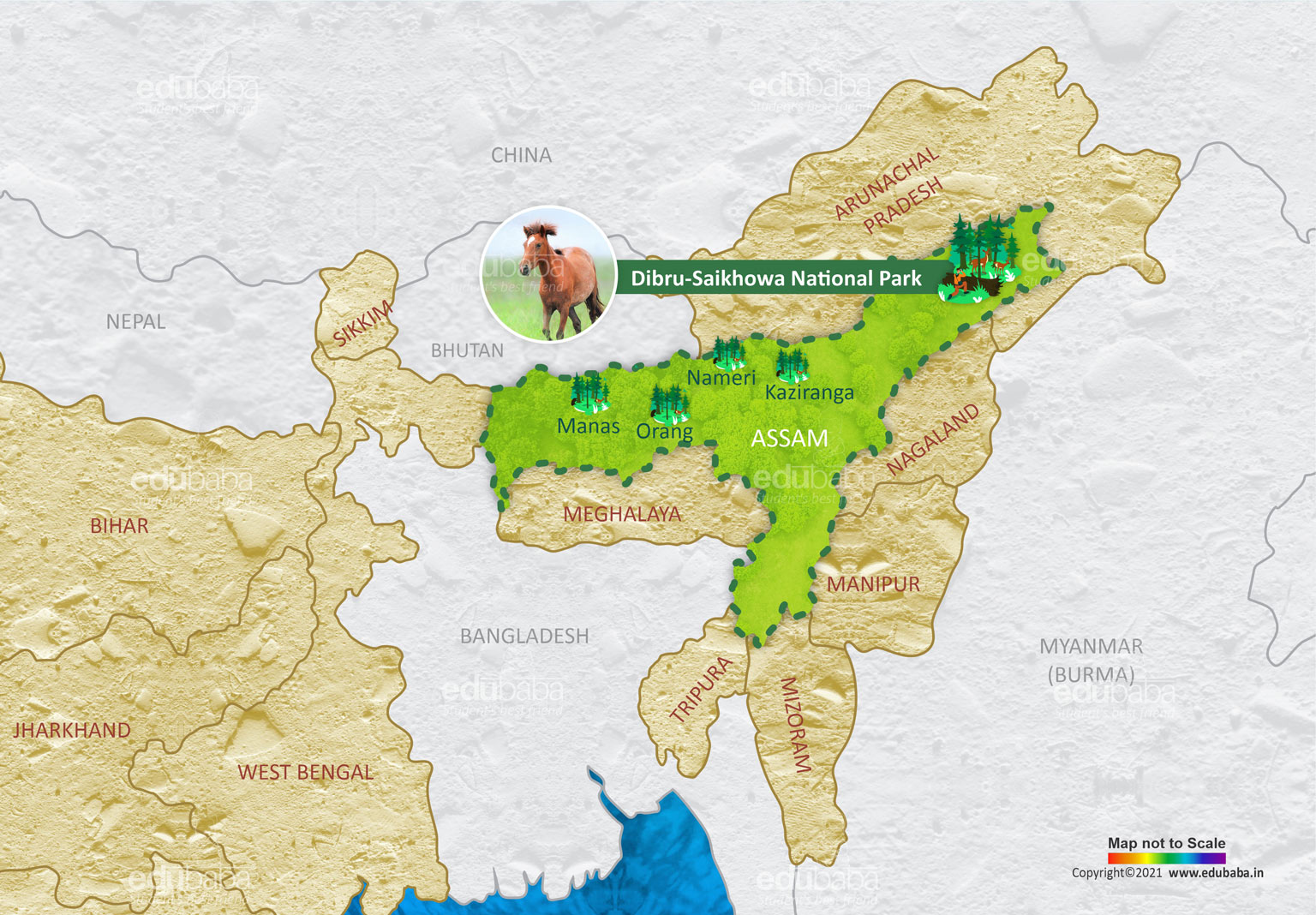
As polling ends at Laika and Dodhia stations inside Dibru-Saikhowa National Park, armed forest guards escort polling teams back to district headquarters. The event brings focus to the location and ecological significance of the national park.
Dibru-Saikhowa National Park:
| Dimension | Key Details |
|---|---|
| Location | Dibrugarh and Tinsukia districts of Assam. |
| Boundaries | Brahmaputra and Lohit rivers in the north and Dibru River in the south. |
| Protected Status | Biosphere Reserve. |
| Climate | Comprises tropical monsoon conditions with hot and wet summers and cool and usually dry winters. |
| Vegetation Types | Comprises moist mixed semi-evergreen forests, moist mixed deciduous forests, canebrakes, and grasslands. |
| Special Flora Feature | Provides for the largest salix swamp forest in northeastern India. |
| Flora | Comprises pine vegetation, Tetrasperma, Dalbergia sissoo, Dillenia indica, and other tropical trees. |
| Conservation Focus | Provides for conservation and development of the White-winged wood duck in its natural habitat. |
| Notable Fauna | Comprises feral horses, hoolock gibbon, water buffalo, tiger, elephant, capped langur, slow loris, and Gangetic river dolphin. |
| Bird Importance | Is identified as an Important Bird Area with more than 382 bird species. |
| Bird Species | Comprises Greater Adjutant Stork, Lesser Adjutant Stork, and Greater Crested Grebe. |