|
Devdar Forests in Western Himalayas: Ecology, distribution and threats
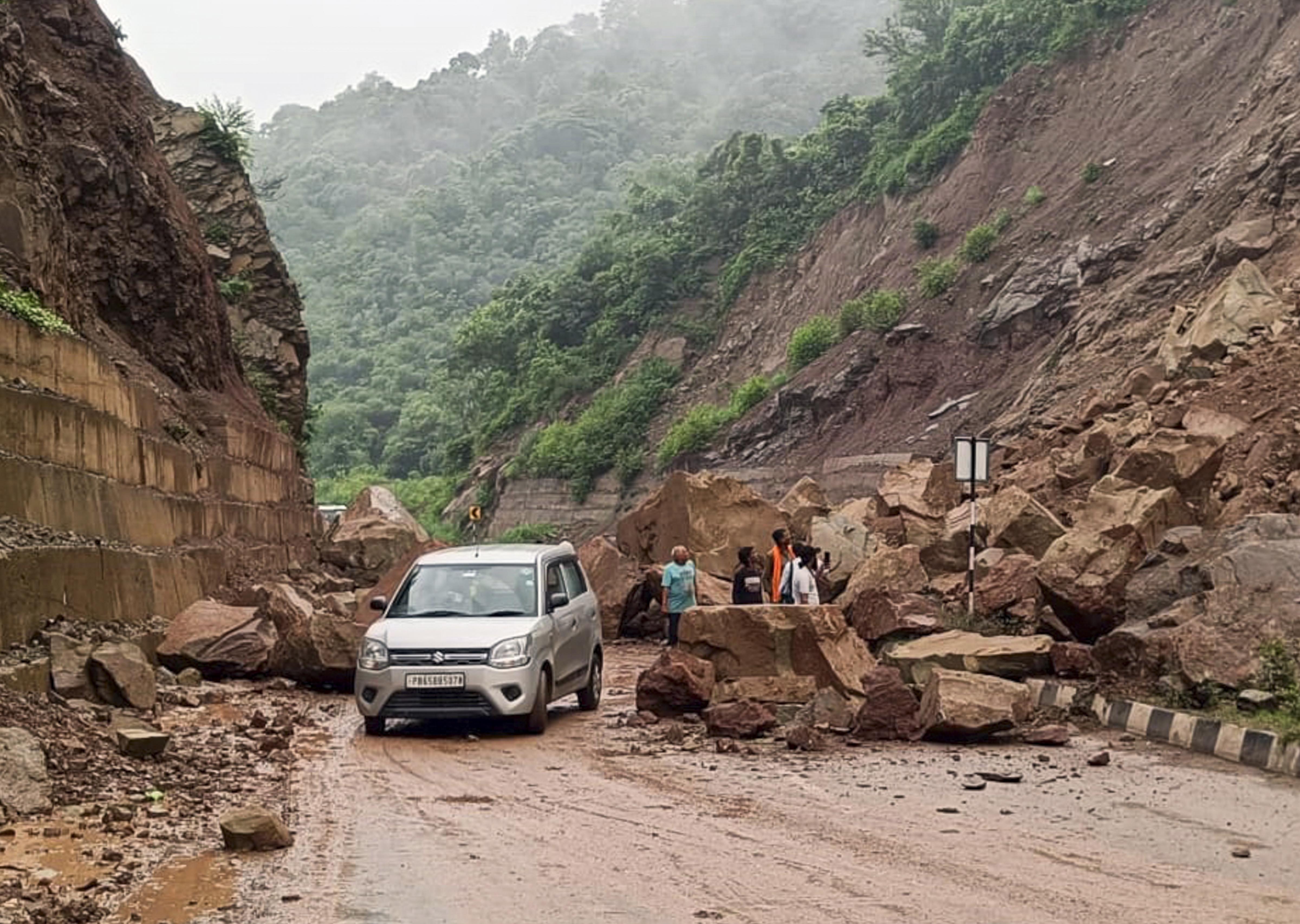
In 2025, nearly year-long climate disasters cause over 4,000 deaths in Himachal Pradesh and Uttarakhand, while a road project continues, cutting down about 7,000 sacred Devdar trees and other native species. The ecological impacts on Devdar forests and associated concerns linked to road construction standards and landslide vulnerability in the Western Himalayas.
Devdar (Deodar) Forests and Char Dham Project:
| Dimension | Key Details |
|---|---|
| Scientific name | Cedrus deodara |
| Ecosystem type | High-altitude evergreen coniferous ecosystems |
| Etymology | Derived from Sanskrit term devadaru (deva means god, daru means wood) |
| Habitat | Thrives in temperate climates; found in dense, pure stands or mixed with oak and fir |
| Native distribution | Western Himalayas spanning Afghanistan, Pakistan, India (Himachal Pradesh, Uttarakhand), and Nepal |
| Key locations in India | Commonly found in Kashmir, Himachal Pradesh, and the Kumaon region; especially located in the Bhagirathi Eco-Sensitive Zone (4,000 sq. km, notified in 2012) |
| Key characteristics | Large conifer with needle-like leaves and drooping branchlets; fat, stout, upright cones disintegrate upon maturity, leaving only an upright spike on the branch |
| Altitude and size | Grows at elevations of 1,500–3,200 m; trees 40–60 m tall with conical crowns and aromatic wood |
| Significance - spiritual | Ancient Hindu texts and Shaivite traditions refer to these as Darukavana (forest of deodars), associated with places where sages performed penance |
| Significance - economic | Wood is valued for durability and scent; used in traditional medicine |
| Significance - ecological | Stabilises slopes; prevents landslides; maintains water quality of the Ganga (antimicrobial properties); regulates microclimates; sustains aquatic ecosystems |
| Threats | Deforestation, flawed infrastructure, climate change, and governance failures |
| Translocation | Translocating ancient Devdar trees is governed by the claim that their site-specific functions cannot be recreated elsewhere |
| Climate-disaster (2025) | Nearly year-long climate disasters cause over 4,000 deaths in Himachal Pradesh and Uttarakhand |
| Launch year | Launched in 2016 |
| Char Dham Project purpose | Provides for all-weather road connectivity to Badrinath, Kedarnath, Gangotri, and Yamunotri in Uttarakhand |
| Status | As of January 2026, in final phases; approximately 75% work completed; expected to be complete by end of 2026 |
| Controversy | Approval led to felling of nearly 7,000 Devdar trees and diversion of 43 hectares of forest land |
| Road standards and landslides | Adopting flawed DL‑PS road standards is reported to have triggered more than 800 landslide zones |
| Vulnerability | Highlights systemic planning failures fragmented EIAs, unsafe construction practices, poor waste management, lack of carrying-capacity planning, and prioritisation of short-term gains over long-term disaster resilience. |