|
Debate on Preventive Detention in Delhi Protests
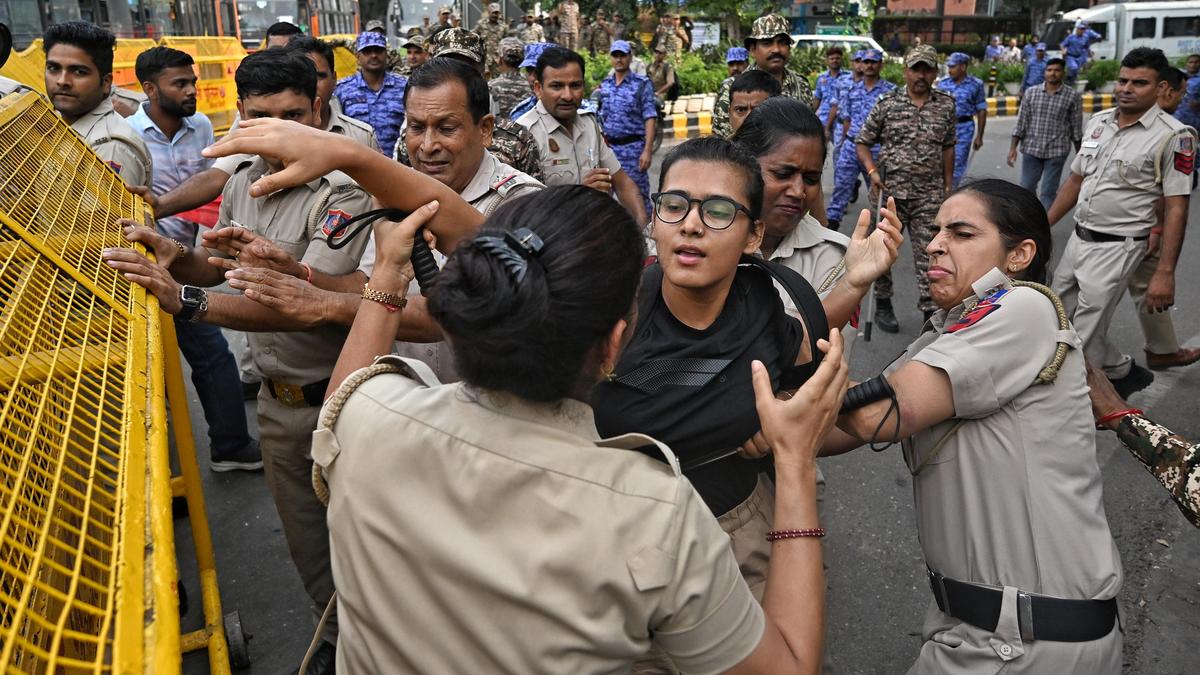
The Supreme Court’s 11 October 2026 directions on alleged illegal detentions and restrictions on movement during protests in Delhi renew debate on preventive detention, prohibitory orders, and constitutional freedoms. The news focus remains on the legal framework for preventive detention, Section 163 of the BNSS, 2023, and constitutional safeguards against arbitrary detention.
Preventive Detention and Prohibitory Orders:
| Dimension | Key Details |
|---|---|
| Preventive detention | Preventive detention comprises detention of a person without a criminal trial or conviction to prevent an anticipated offence or threat rather than punish a past act. |
| Grounds for invocation | In India, preventive detention applies to grounds relating to public order, national security, and other legally specified concerns. |
| National Security Act (NSA), 1980 | The National Security Act, 1980 authorises preventive detention where statutory conditions are met, including when a person’s activities are considered prejudicial to the defence of India, relations with foreign powers, or the security of the State. |
| Preventive detention (nature) | Preventive detention provides for restriction of personal liberty without the ordinary process of criminal prosecution and conviction. |
| Preventive detention vs prohibitory orders | Preventive detention provides for restriction of an individual’s liberty through detention, whereas a prohibitory order regulates conduct or movement to prevent an imminent threat. |
| Section 163, BNSS, 2023 | Section 163 of the Bharatiya Nagarik Suraksha Sanhita, 2023 provides for an approach that substantially retains former Section 144 of the Code of Criminal Procedure, 1973. |
| Section 163, BNSS (authority and grounds) | Section 163 authorises designated Executive Magistrates to issue urgent orders where immediate prevention or a speedy remedy is necessary to avert obstruction, danger to human life or safety, disturbance of public tranquillity, riots, or similar threats. |
| Section 163, BNSS (procedure) | Section 163 authorises issuance of orders without prior notice where urgency warrants it, and mandates that the order state the material facts supporting the decision. |
| Section 163, BNSS (checks) | Section 163 orders are governed by judicial scrutiny and proportionality to the threat involved. |
| Article 22(4) | Article 22(4) mandates that a person generally cannot be detained under a preventive detention law for more than 3 months without the constitutionally prescribed Advisory Board review, subject to applicable exceptions and conditions. |
| Article 22(5) | Article 22(5) mandates that the detaining authority communicate the grounds of detention as soon as possible and provide an opportunity to make a representation against the order. |
| Judicial review (detention orders) | Judicial review authorises courts to examine whether detention orders comply with statutory requirements and constitutional safeguards. |
| Fundamental rights | Articles 14, 19, and 21 apply to equality before the law, specified freedoms, and life and personal liberty, respectively. |
| Evolution of preventive detention laws | The preventive detention framework in India comprises laws and events including: Rowlatt Act, 1919; Defence of India Act, 1939; Preventive Detention Act, 1950 (in force until 1969); Maintenance of Internal Security Act (MISA), 1971 (used during the Emergency of 1975-77, repealed in 1978); Conservation of Foreign Exchange and Prevention of Smuggling Activities Act (COFEPOSA), 1974; and NSA, 1980. |
| Maneka Gandhi v. Union of India (1978) | Maneka Gandhi v. Union of India (1978) provides for the principle that procedures restricting personal liberty be just, fair, and reasonable. |
| Babulal Parate v. State of Maharashtra (1961) | Babulal Parate v. State of Maharashtra (1961) provides for constitutional validity of the predecessor to Section 163 BNSS while providing for operation of such powers within legal limits. |
| Khudiram Das v. State of West Bengal (1975) | Khudiram Das v. State of West Bengal (1975) provides for communicating detention grounds, enabling representations, and checking arbitrary executive action. |
| Ramlila Maidan incident (2012) | The Ramlila Maidan incident (2012) provides for use of prohibitory powers only in grave circumstances requiring immediate intervention. |
| Mazdoor Kisan Shakti Sangathan v. Union of India (2018) | Mazdoor Kisan Shakti Sangathan v. Union of India (2018) provides for rejection of a blanket ban on protests at Jantar Mantar, and provides for regulation rather than complete prohibition. |
| Shaik Naznen v. State of Telangana (2022) | Shaik Naznen v. State of Telangana (2022) provides for preventive detention powers as exceptional and not exercised routinely. |
| Ameena Begum v. State of Telangana (2023) | Ameena Begum v. State of Telangana (2023) provides for enforcement of constitutional safeguards under Articles 14, 19, and 21. |