|
US Strikes on Iran’s Kharg Island Targets
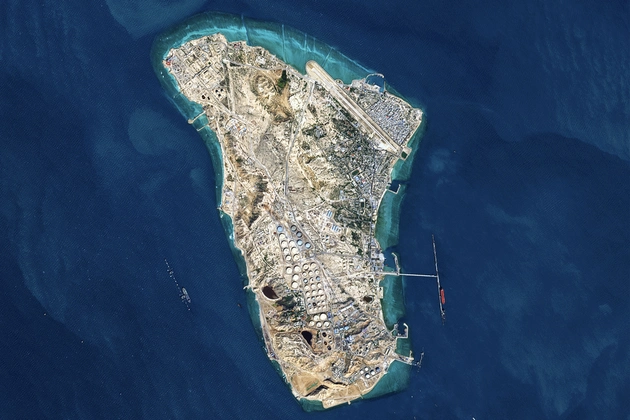
Kharg Island has gained global attention due to recent tensions in West Asia, as it serves as Iran’s primary oil export hub and a critical node near the Strait of Hormuz, a key global energy chokepoint.
Kharg Island :
| Aspect | Key Details |
|---|---|
| Location | Strategic coral island in the northern Persian Gulf, near the coast of Iran’s Bushehr Province and close to the Strait of Hormuz. |
| Geographical Features | Rocky limestone and coral island, about 8 km long and 4 km wide; unique for having its own natural freshwater supply. |
| Nickname | Known as the “beating heart” of Iran’s energy infrastructure. |
| Historical Significance | Inhabited for over 2,000 years; served as a trading post under Achaemenid and Sassanid Empires; hosted a Nestorian Christian monastery; had Dutch East India Company presence (1753–1766); briefly occupied by the British in the 19th century. |
| Archaeological Evidence | A 2,400-year-old Old Persian cuneiform inscription discovered in 2007. |
| Strategic Importance (War) | Major target during the Iran–Iraq War (1980–1988). |
| Security Status | Heavily guarded by the Islamic Revolutionary Guard Corps (IRGC); access restricted and requires special clearance. |
| Oil Export Hub | Handles about 90% of Iran’s crude oil exports, making it the country’s primary export terminal. |
| Storage Capacity | Approximately 28–30 million barrels of oil. |
| Economic Role | Generates significant energy revenue (estimated around $78 billion annually), contributing to Iran’s economy and military funding. |
| Global Energy Significance | Located near the Strait of Hormuz, through which about one-fifth of global petroleum liquids consumption passes; any disruption impacts global oil markets. |
| Iran’s Energy Profile | Iran holds around 10% of global proven oil reserves and 15% of global natural gas reserves; among the top oil producers globally. |