|
Ultra-Heavy Dark Matter Capture in Neutron Stars to Tiny Black Holes
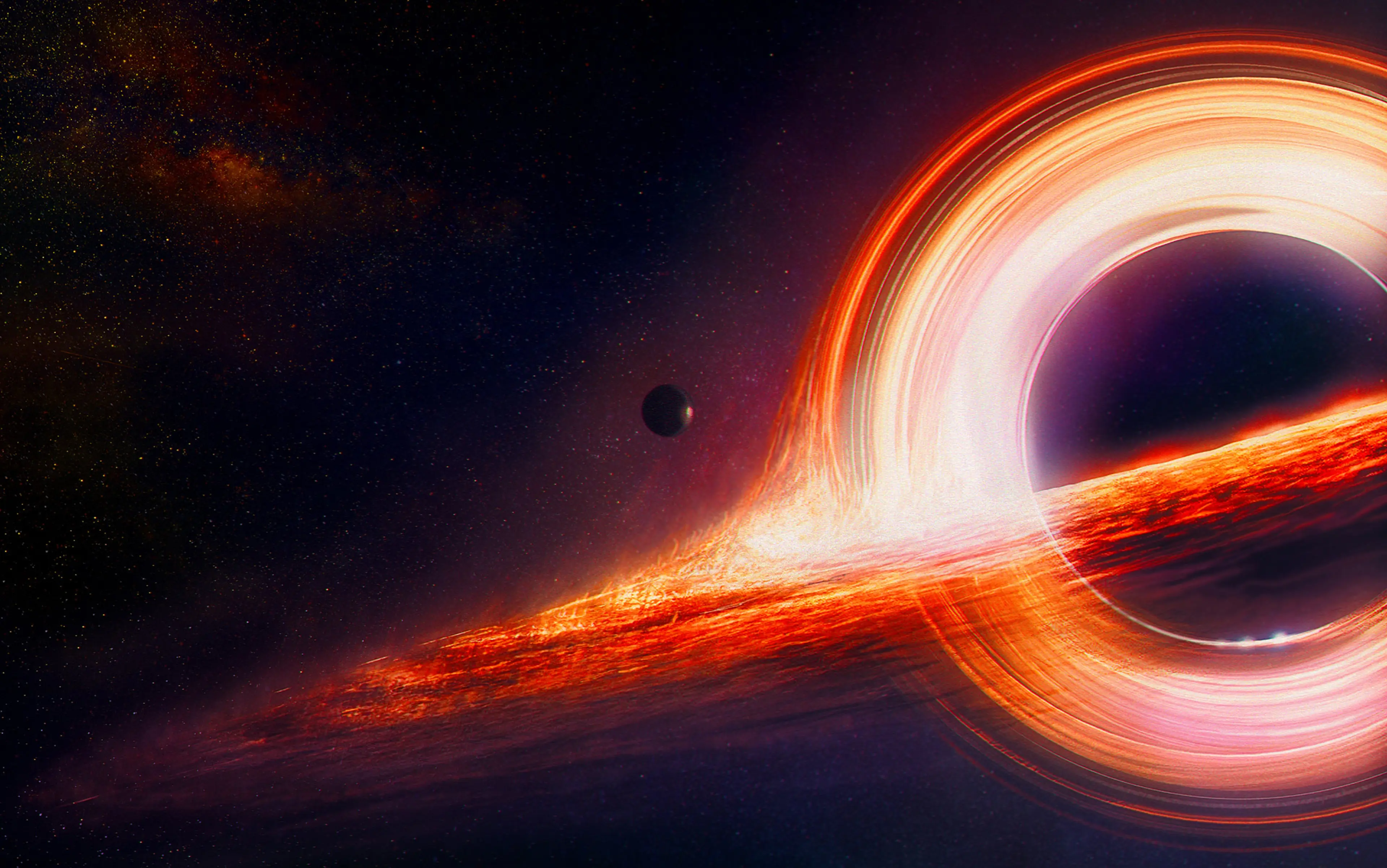
A recent study suggests that ultra-heavy dark matter particles trapped inside dense stellar remnants can accumulate at their centres and collapse into tiny black holes. The study links tiny black hole survival and growth to Hawking evaporation and continuous dark-matter feeding, and uses the long survival of old dense stars to constrain ultra-heavy dark matter properties.
Ultra-Heavy Dark Matter Capture:
| Dimension | Key Details |
|---|---|
| Tiny black hole initial mass | The resulting black holes could initially have masses as low as about 40 tonnes. |
| Hawking evaporation | Very small black holes are expected to lose mass through Hawking radiation, and the smaller the black hole, the faster it evaporates. |
| Dark-matter feeding mechanism | A continuous supply of dark matter could compensate for mass loss from Hawking evaporation, allowing a tiny black hole to grow rather than disappear. |
| Effect on host star | Once the black hole overcomes evaporation, it could gradually consume surrounding stellar matter and potentially transform the entire star into a black hole. |
| Constraint approach | The survival of old dense stars for billions of years can help scientists place constraints on the properties of ultra-heavy dark matter. |
| Considered stellar objects | Objects considered comprise millisecond pulsars and white dwarfs. |
| Millisecond pulsars | Millisecond pulsars comprise extremely dense, rapidly rotating neutron stars that emit regular pulses of electromagnetic radiation, often with rotation periods of less than 10 milliseconds. |
| White dwarfs | White dwarfs comprise extremely dense remnants of stars that have exhausted their nuclear fuel. |
| Assumed survival ages in study | Researchers consider conservative survival ages of approximately 1 billion years for millisecond pulsars and 10 billion years for white dwarfs. |
| Ordinary matter interactions | Ordinary matter interacts through electromagnetic, strong, and weak nuclear forces and forms stars, planets, and living organisms. |
| Dark matter properties | Dark matter does not absorb, emit, or reflect light in the conventional way, and its presence is inferred primarily through gravitational effects. |
| Dark matter vs. ordinary matter | Dark matter is not simply invisible ordinary matter. |