|
Sri Veerabhadreshwar Temple, Yadur, Belagavi
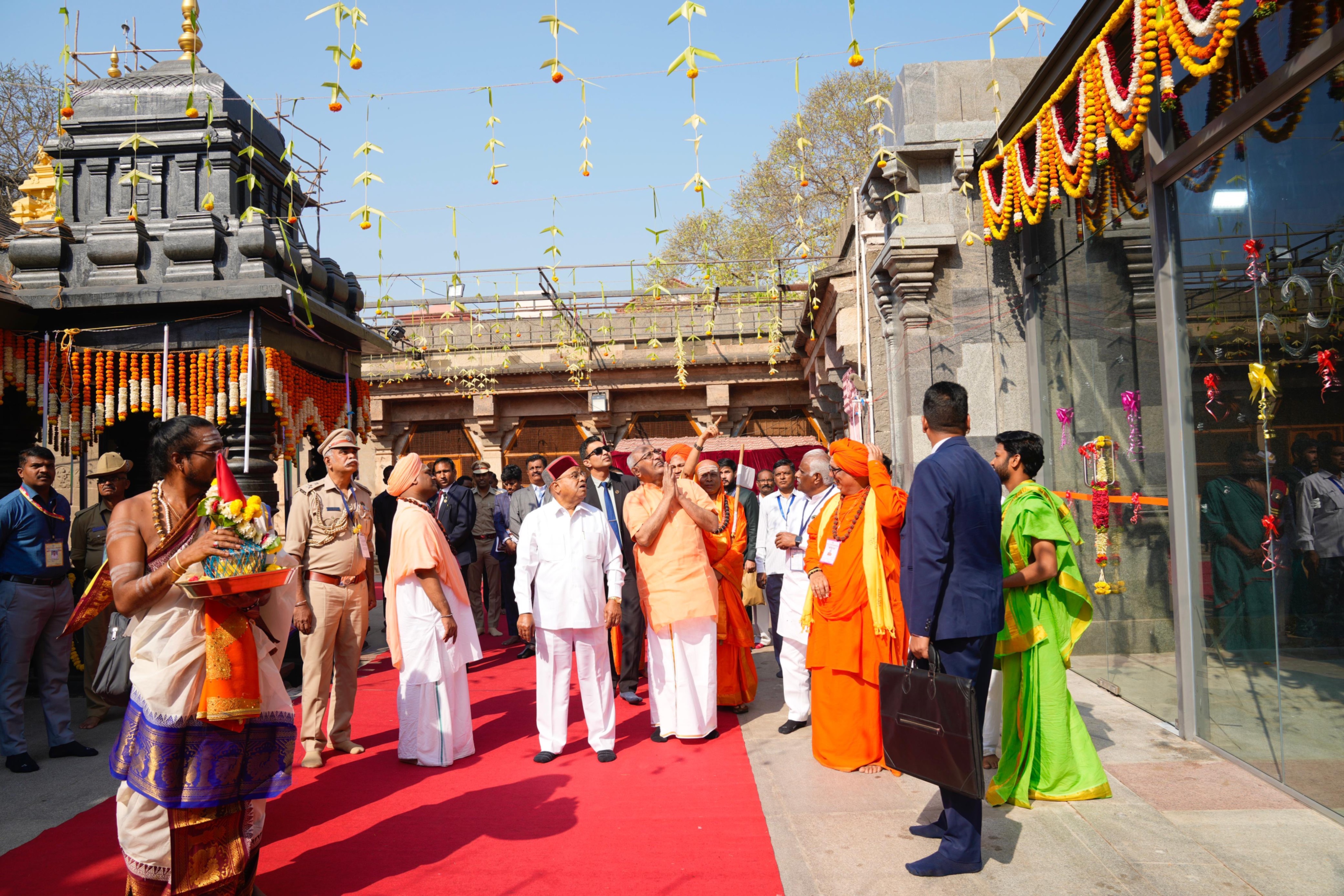
The Vice-President of India attended the inauguration of the Rajagopuram, Kalasarohan and Mahakumbhabhishekam ceremony at Sri Veerabhadreshwar Temple. The temple is located at Shri Kshetra Yadur in Belagavi district of Karnataka.
Sri Veerabhadreshwar Temple and Veerashaiva Tradition:
| Dimension | Key Details |
|---|---|
| Location | Situated at Shri Kshetra Yadur on the banks of the Krishna River in Belagavi district of Karnataka. |
| Historical Origin | Founded in the 12th century by the Veerashaiva saint Shri Kadsiddeshwar and the temple is about 800 years old. |
| Main Deities | Dedicated to Shri Veerabhadra a fierce manifestation of Lord Shiva and Shri Bhadrakalamma Devi. |
| Sacred Symbol | The Shivalinga worshipped in the temple is known as Shri Veerupakshalinga. |
| Veerashaiva Lingayat Tradition | Religious tradition whose followers worship the Linga as the supreme symbol of Lord Shiva. |
| Emergence | The movement emerged in the 12th century in Karnataka as a religious and social reform movement. |
| Key Leader | Basaveswara played a central role in spreading the Veerashaiva movement. |
| Core Belief | All devotees wearing the personal Ishtalinga are considered equal irrespective of caste gender or occupation. |
| Worship Practice | Devotees wear and worship a personal Ishtalinga symbolising a direct connection with Lord Shiva. |
| Doctrinal Features | Provides rejection of elaborate rituals sacrifices and idol worship along with opposition to caste based discrimination and ritual purity concepts. |
| Social Principles | Provides emphasis on equality dignity of labour and equal access to salvation. |
| Kayaka Principle | Provides the doctrine that all forms of work are sacred and should be performed with devotion. |
| Institutional Structure | Includes Mathas which propagate teachings and Jangamas who travel to spread Veerashaiva doctrines. |