|
Padma Doree Initiative
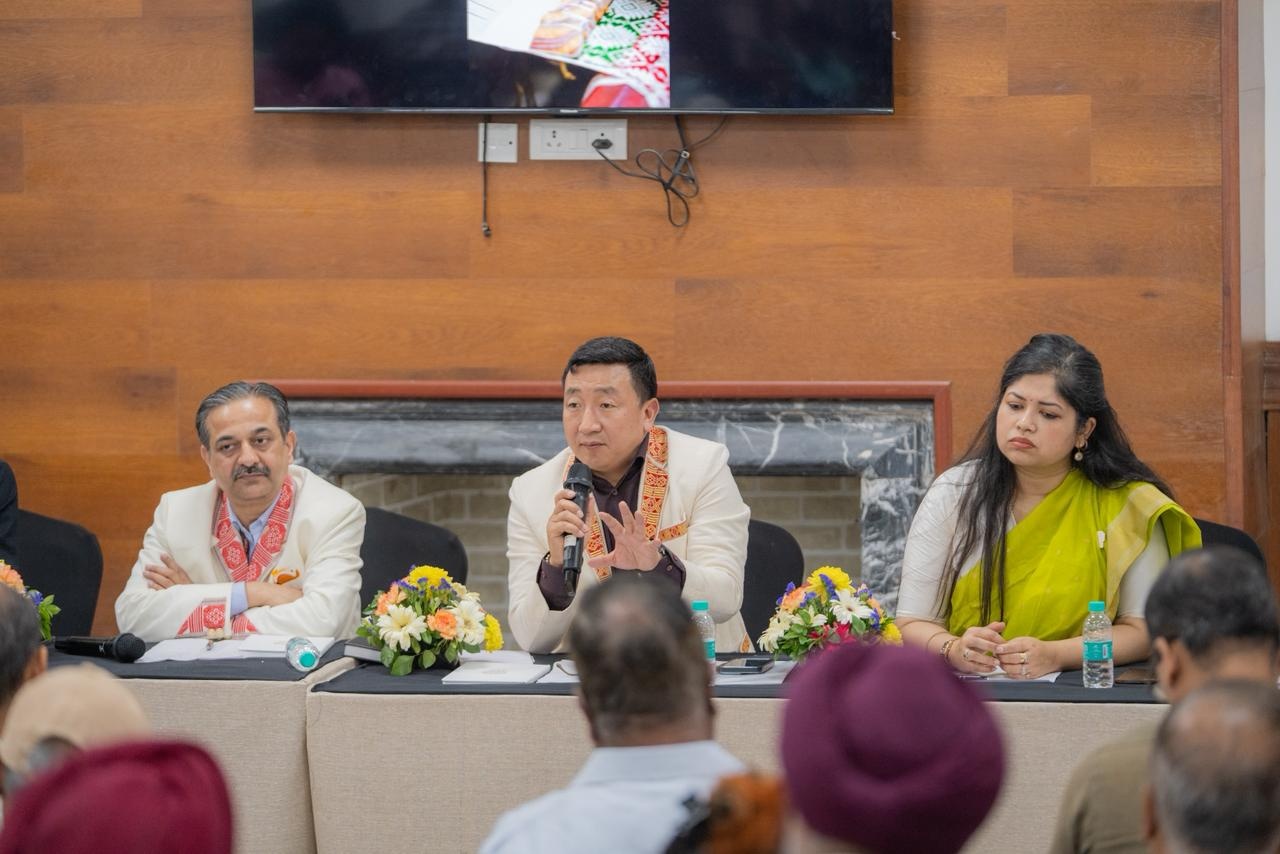
NEHHDC launches Padma Doree as a cross-regional textile initiative combining Northeast India’s Eri silk with Madhya Pradesh’s Chanderi weaving tradition. The initiative is currently relevant for sustainable textiles, artisan livelihoods, and cultural integration.
Padma Doree:
| Dimension | Key Details |
|---|---|
| Nature | Padma Doree is a cross-cultural textile collaboration that fuses Eri silk from Northeast India with Chanderi weaving traditions of Madhya Pradesh. |
| Launching Body | Padma Doree has been launched by NEHHDC under the Ministry of Development of North Eastern Region. |
| Goal | The initiative provides for a sustainable textile ecosystem, national integration, and empowerment of regional artisans. |
| Material Combination | The initiative combines the warmth, durability, and texture of Eri silk with delicate motifs and sheer elegance of Chanderi fabric. |
| Eri Silk | Eri silk is also called Ahimsa silk or peaceful silk and is processed without killing the silkworm. |
| Heritage Synergy | The project provides direct knowledge exchange and design bridging between weavers from Central India and Northeast India. |
| Beyond Textiles | The initiative integrates regional culinary experiences to showcase cultural richness of both participating regions. |
| Eri Silk Origin | Eri silk originates in Assam and other Northeastern states. |
| Chanderi Origin | Chanderi fabric originates in Chanderi, Ashoknagar district of Madhya Pradesh. |
| Eri Silk Type | Eri silk is produced by Samia ricini fed on castor leaves. |
| Chanderi Fabric Type | Chanderi fabric is a blend of cotton, silk, and traditional zari. |
| Texture | Eri silk has a dense wool-like texture and thermal properties, while Chanderi fabric has a light, sheer, and transparent texture. |
| Unique Traits | Eri silk is known for non-violent extraction, while Chanderi fabric is known for butti motifs and a shimmery finish. |
| GI Status | Both Eri silk and Chanderi fabric have GI tags. |
| Significance | The initiative provides for Ek Bharat Shreshtha Bharat, eco-friendly production, ethical fashion, artisan livelihoods, and modern luxury market access. |
| India’s Silk Production | India produces 4 types of silk: Mulberry, Eri, Tasar, and Muga. |