|
Nuclear Energy Mission Roadmap Targets 100 GW by 2047
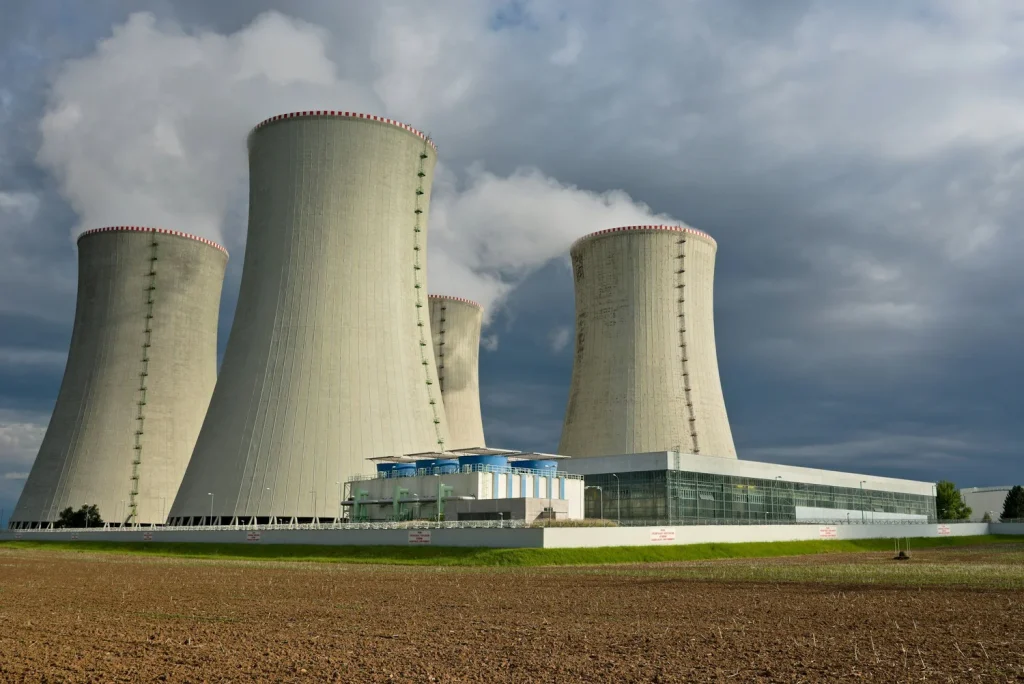
The government unveils the Nuclear Energy Mission roadmap to reach 100 GW nuclear power capacity by 2047. The roadmap provides for five indigenous Small Modular Reactors by 2033 and cites indigenous reactor technologies under development by BARC.
Nuclear Energy Mission Roadmap and Related Provisions:
| Dimension | Key Details |
|---|---|
| Roadmap target | The Nuclear Energy Mission roadmap provides for reaching 100 GW by 2047. |
| Planned deployment | The roadmap provides for 5 indigenous Small Modular Reactors by 2033. |
| BARC role | Bhabha Atomic Research Centre (BARC) comprises development of 3 indigenous reactor technologies. |
| BSMR-200 | Bharat Small Modular Reactor (BSMR-200) comprises 220 MW capacity. |
| SMR-55 | SMR-55 comprises 55 MW capacity. |
| HTGCR | High Temperature Gas Cooled Reactor (HTGCR) comprises up to 5 MW thermal capacity, and provides for hydrogen production via thermochemical processes, including the copper-chlorine cycle. |
| SHANTI Act, 2025: Private participation | The SHANTI Act, 2025 provides for opening the nuclear sector to private companies for generation and research. |
| SHANTI Act, 2025: Indigenous technology | The SHANTI Act, 2025 provides for encouraging domestic development of advanced reactors. |
| SHANTI Act, 2025: Regulation | The SHANTI Act, 2025 provides for granting statutory status to the Atomic Energy Regulatory Board (AERB), and authorises strengthening of its independence, oversight, and enforcement powers. |
| Safety and waste management design principles | Design principles comprise multiple safety layers, redundancy, diversity, and defence-in-depth. |
| Oversight | Oversight comprises rigorous reviews by NPCIL (Nuclear Power Corporation of India Limited) and AERB (Atomic Energy Regulatory Board). |
| Waste management governance | Waste management is governed by Atomic Energy (Safe Disposal of Radioactive Wastes) Rules, 1987, and AERB safety codes. |
| Waste management process | Waste management comprises waste segregation, treatment, storage in engineered containment, and continuous monitoring. |