|
New subterranean eel species Rakthamichthys anchi discovered
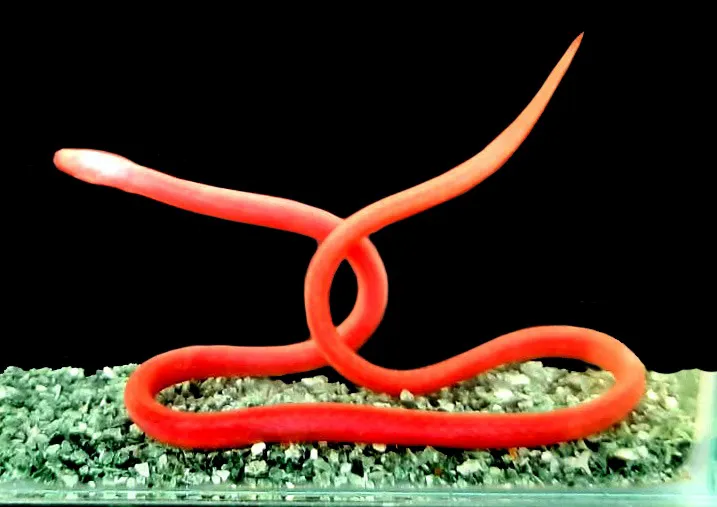
Scientists discover a new species of blind, blood-red eel named Rakthamichthys anchi in underground aquifers connected to dug-out wells in Goalpara district, Assam. Researchers confirm it as a distinct species using micro-computed tomography (micro-CT) scanning and DNA analysis.
Rakthamichthys anchi (New subterranean eel species):
| Dimension | Key Details |
|---|---|
| Discovery location | Rakthamichthys anchi comprises a species recorded from Goalpara district, Assam. |
| Habitat | The discovery comprises underground aquifers connected to dug-out wells. |
| Well-specific record | The record comprises 2 wells, each about 7 metres deep. |
| Specimens recorded | The record comprises 4 specimens so far. |
| Genus composition and distribution | The genus Rakthamichthys comprises subterranean swamp eels that are endemic to India. |
| Genus-level adaptations | Members of the genus comprise adaptations: elongated bodies, reduced eyesight, and red pigmentation. |
| Etymology (genus name) | The term Rakthamichthys comprises the Malayalam word raktham meaning “blood”, and the Greek word ichthys meaning “fish”. |
| Etymology (species name) | The species name anchi comprises a Garo language word meaning “blood”. |
| Species traits | Rakthamichthys anchi comprises traits associated with life in complete darkness, including lack of visible eyes and lack of body pigmentation. |
| Blood-red colour | The characteristic blood-red colour comprises blood vessels being visible through translucent skin. |
| Methods used for confirmation | The confirmation comprises micro-computed tomography (micro-CT) scanning and DNA analysis. |
| Recent regional context | The regional record comprises a 2nd subterranean fish discovery from the same region within a short period, following the discovery of Gitchak nakana. |
| Inference from finding | The finding comprises an indication that underground aquifers of northeastern India may harbour a rich and largely unexplored ecosystem. |