|
Jharia Coalfield Fires in Jharkhand
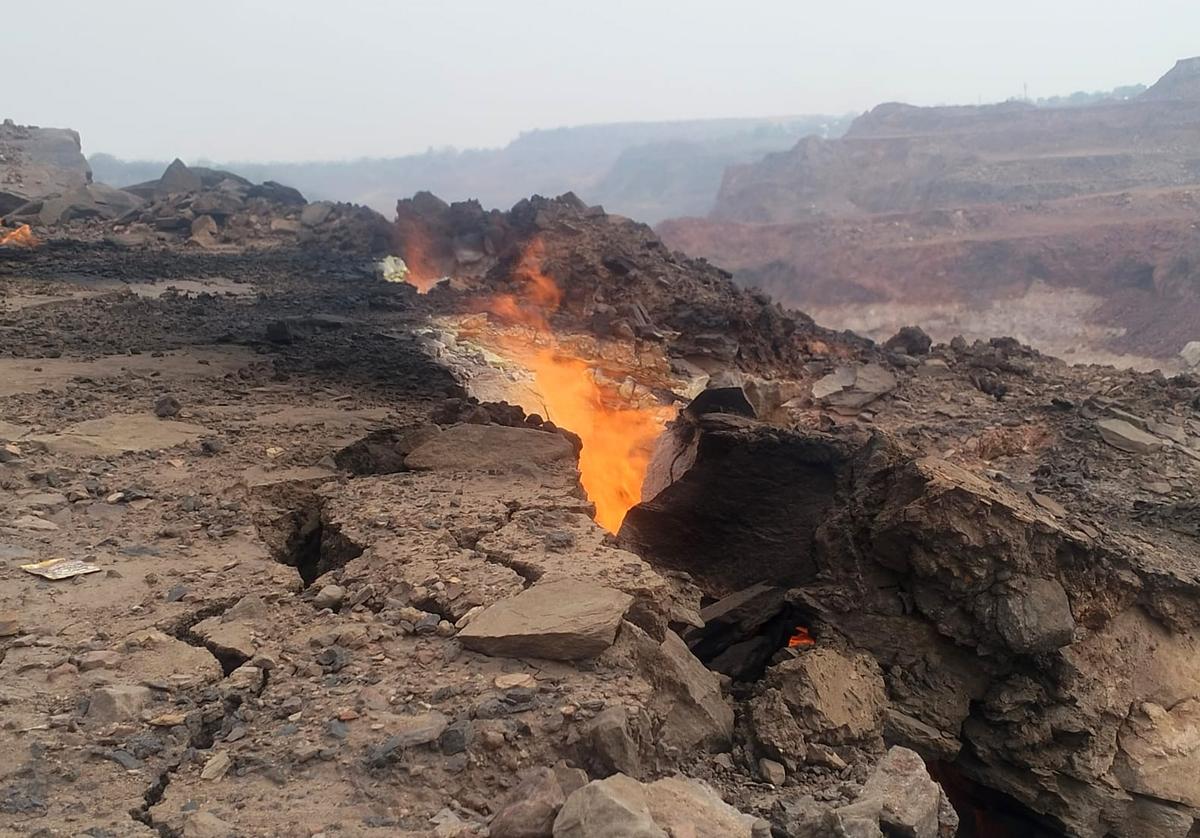
A recent study finds that underground coal fires in the Jharia coalfields burn hotter and release more greenhouse gases than earlier estimated. The study is for climate accounting, coalfield safety, and greenhouse gas emissions assessment.
Jharia Coalfield Fires:
| Dimension | Key Details |
|---|---|
| Study | The study has been published in Communications Earth & Environment with researchers from the UK and India, along with CSIR-CIMFR. |
| Subsurface Fire | Subsurface fires occur when mining exposes coal to oxygen and oxidation reactions trigger underground fires that can burn for decades. |
| Vertical Collapse | Underground fires consume coal seams and destabilise overlying rock layers, creating collapse structures up to 10 m wide and 100 m deep. |
| Gas Vents | Collapse structures act as vents for toxic and hot gases. |
| Extreme Temperatures | Large isolated collapse structures can approach temperatures near 4,000°C under specific conditions. |
| Fugitive Emissions | Fugitive emissions from Jharia fires could reach up to 748.72 million tonnes of CO₂-equivalent per year. |
| Fugitive Emissions Meaning | Fugitive emissions are gases or vapours released from leaks or uncontrolled sources such as coal fires and open tailings. |
| Paralava | Paralava is rock formed when sedimentary rock around a coal seam melts and re-solidifies due to intense heat from underground coal fires. |
| Birianiite | Birianiite is a fused glass-enveloped rock found at the Ena and Tisera collieries. |
| Location | Jharia coalfield is located in Dhanbad district of Jharkhand in the Damodar river valley. |
| Importance | Jharia is India’s largest repository of coking coal used in blast furnaces for steelmaking. |
| Fire Background | Underground fires in Jharia have been burning since at least 1916 due to legacy unscientific mining and historical open-cast mining practices. |