|
India Rejects Permanent Court of Arbitration Award on Indus Waters Treaty
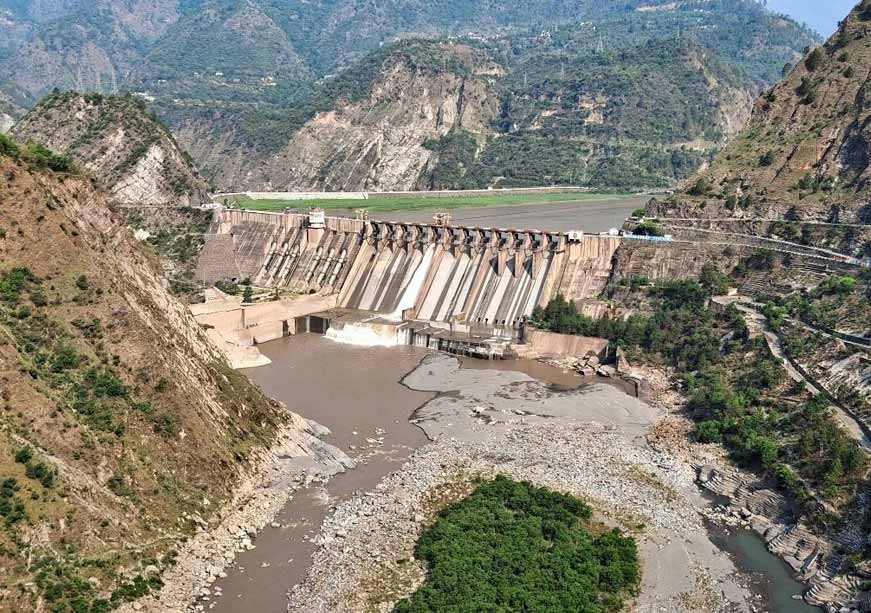
India has formally rejected an award issued by a Hague-based Court of Arbitration constituted under the aegis of the Permanent Court of Arbitration, concerning the Indus Waters Treaty (1960). India rejects the arbitration related to its decision to place the treaty in abeyance and to interim measures linked to construction activity at the Ratle Hydroelectric Project.
Indus Waters Treaty:
| Dimension | Key Details |
|---|---|
| Treaty status | India has placed the 1960 Indus Waters Treaty in abeyance following security developments and cross-border terrorism, including the 2025 Pahalgam terror attack. |
| Parallel proceedings | In 2016, Pakistan sought a Court of Arbitration while India requested a Neutral Expert to resolve technical differences over the Kishenganga and Ratle projects. |
| Sequential process contention | India contends that initiating simultaneous proceedings violates the treaty’s mandatory sequential process for dispute resolution. |
| India’s position on tribunal | India has consistently boycotted the Court of Arbitration, and contends that its appointment by the World Bank breaches the treaty and that New Delhi has never recognized its legal existence. |
| Projects under technical dispute | The dispute comprises the Kishenganga project (330 MW) on a Jhelum tributary and the Ratle project (850 MW) on the Chenab River in Jammu and Kashmir. |
| Water allocation: Eastern Rivers | Eastern Rivers, Ravi, Beas, and Sutlej are allocated to India for unrestricted, exclusive usage. |
| Water allocation: Western Rivers | Western Rivers, Indus, Jhelum, and Chenab are allocated to Pakistan, though India is permitted non-consumptive uses, including run-of-the-river hydroelectric power generation under specified design limits. |
| Dispute resolution mechanism | Article IX provides for a 3-tier graded dispute resolution mechanism: Permanent Indus Commission, Neutral Expert, and Court of Arbitration. |
| Permanent Indus Commission | The PIC comprises a bilateral body of commissioners handling routine operational issues and initial queries. |
| Neutral Expert | The NE is appointed for technical “differences,” such as pondage capacity, spillway gates, and intake levels. |
| Court of Arbitration | The CoA is convened only for formal legal “disputes” when technical channels are exhausted or both parties consent. |