|
Government plans nominal MDR on select UPI merchant payments
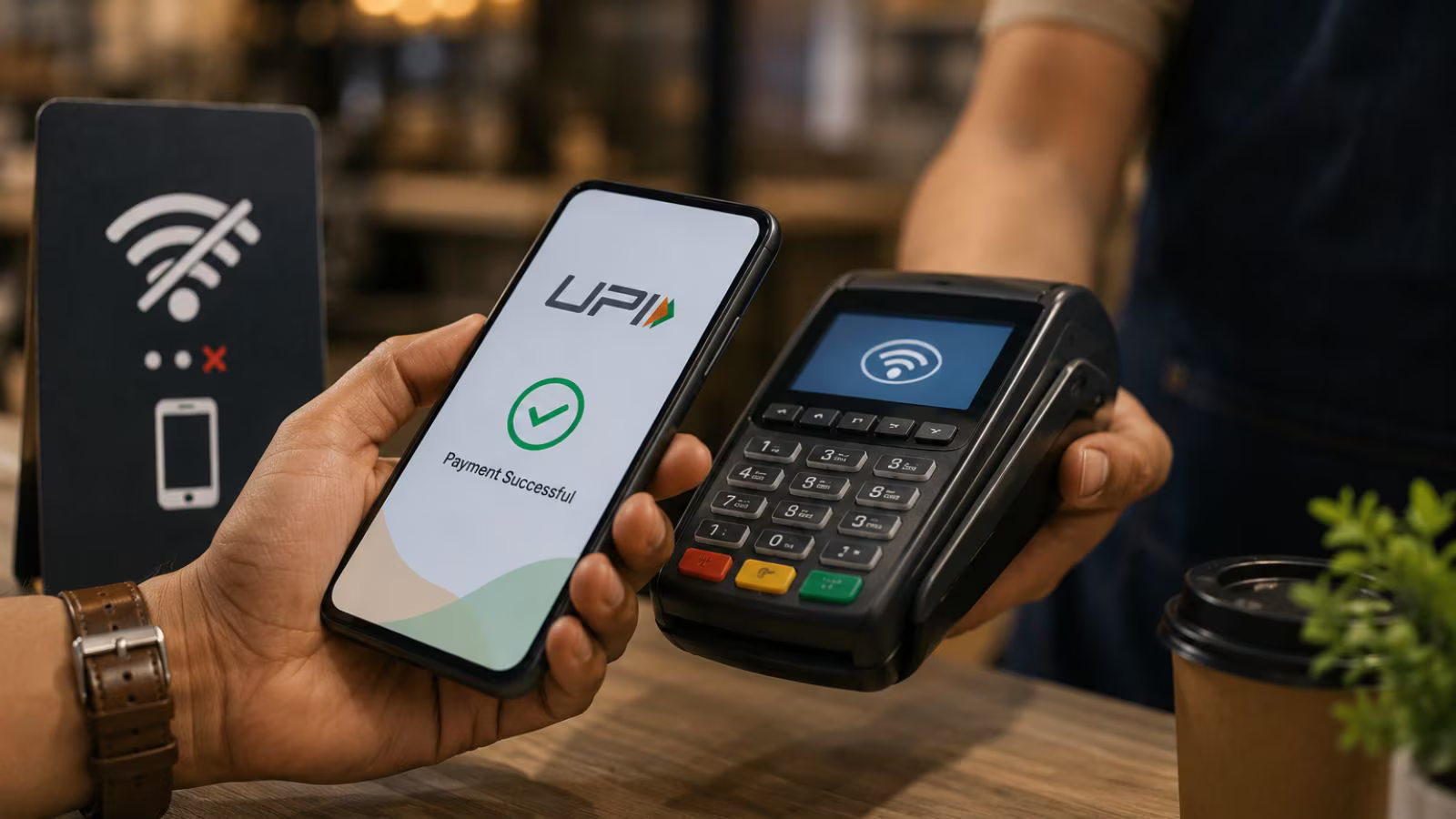
The government states the proposed Merchant Discount Rate (MDR) for UPI transactions is nominal and applies only to a limited set of merchant transactions above a value threshold. The Taxation and Other Laws (Amendment) Bill, 2026 provides for government power to levy MDR on select electronic payment modes, while consumers face no transaction charges and P2P transfers remain free.
Merchant Discount Rate (MDR) and proposed MDR on UPI:
| Dimension | Key Details |
|---|---|
| Definition | MDR is the fee charged to a merchant for accepting a digital payment. |
| Participants in digital payment transaction chain | Depending on the payment mode, parties may include the merchant, payment gateway or payment aggregator, acquiring bank, issuing bank, card network or payment network, and other payment infrastructure participants. |
| How MDR affects merchant settlement | When a customer makes a payment, the merchant usually receives the transaction amount after deduction of MDR. |
| Cost components covered by MDR | MDR fees cover costs including: payment processor fee; interchange fee; assessment fee; markup fee; and additional fees such as fraud prevention, chargeback handling, and customer support. |
| Variability across payment modes | MDR is not a single fixed rate and may apply differently across cards, net banking, wallets, UPI, EMI, BNPL, QR, and other payment modes, depending on the provider and the applicable arrangement. |
| Typical form and range | MDR typically comes in the form of a percentage of the transaction amount and is typically between 1% and 3%. |
| Deduction mechanism | MDR charges are automatically deducted from the merchant’s account at the time of settling the transaction batch. |
| MDR on UPI and RuPay debit cards | Since January 2020, the government removes MDR on UPI and RuPay debit cards. |
| Compensation mechanism mentioned | The government compensates the industry through subsidies. |
| Legal trigger | The Taxation and Other Laws (Amendment) Bill, 2026 empowers the government to levy an MDR on select electronic payment modes. |
| Potential MDR rates mentioned for UPI | The Bill provides for a potential MDR of 0.25% to 0.4% on business-directed UPI transactions. |
| Consumer charges and P2P transfers | As per the finance ministry, consumers face no transaction charges, and all person-to-person (P2P) transfers continue to be free. |
| Applicability of proposed MDR on UPI merchant payments | The government provides that MDR applies only to a limited set of merchant transactions above a certain value threshold, at a nominal rate. |
| Transactions expected to remain free | Small merchants and person-to-merchant payments below the value threshold are expected to remain free. |