|
Agharkar Research Institute Identifies New Foraminifera Species
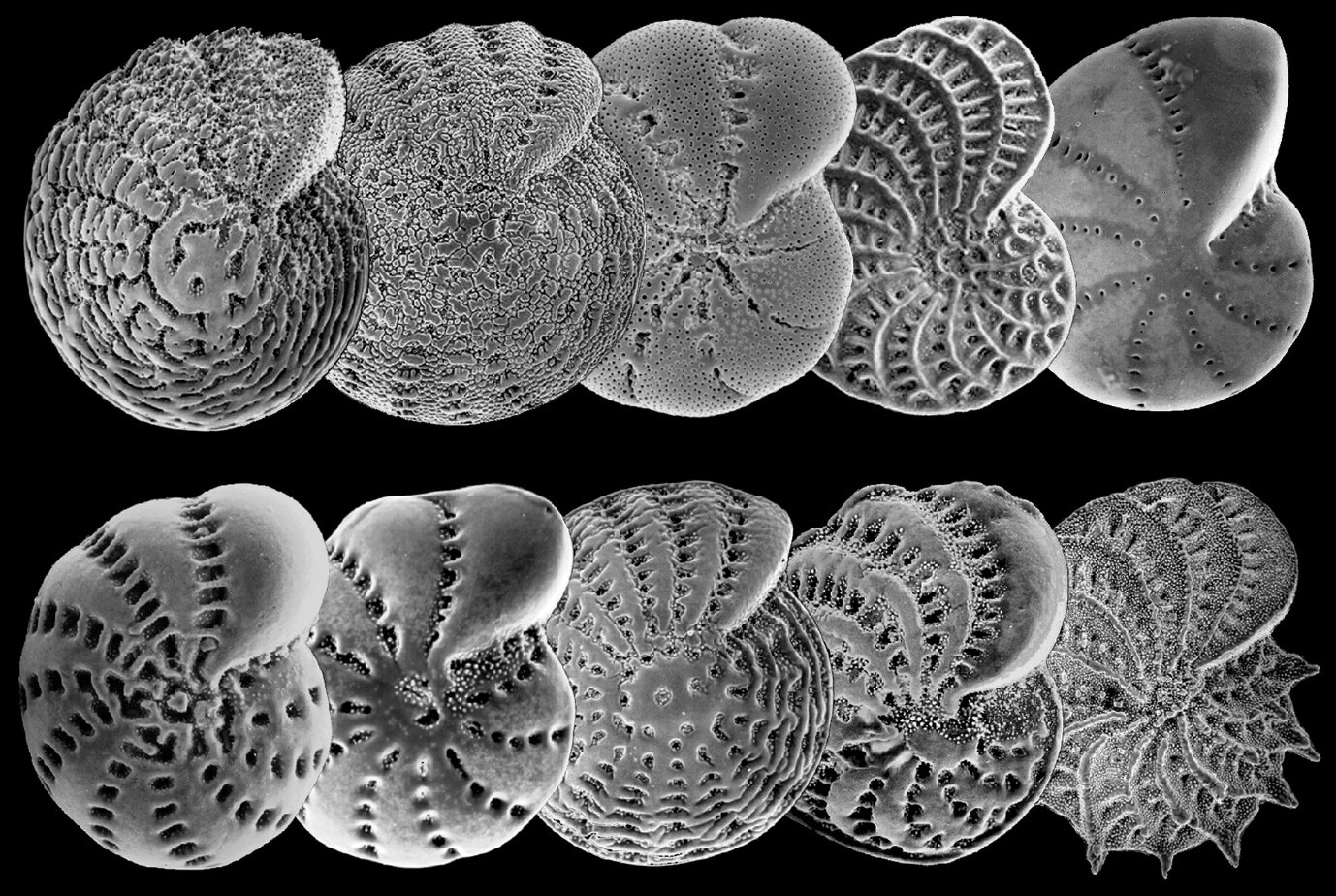
Scientists from Pune’s Agharkar Research Institute (ARI) identify two new species of microscopic marine organisms, Psammophaga holzmannae and Psammophaga sinhai. The species are reported from Rajapuri Creek in Raigad district along Maharashtra’s Konkan coast and are described as foraminifera that selectively ingest specific mineral grains.
New Foraminifera Species:
| Dimension | Key Details |
|---|---|
| Discovering authority | Scientists from Pune’s Agharkar Research Institute (ARI) identify the two new species. |
| Species identified | Comprises Psammophaga holzmannae and Psammophaga sinhai. |
| Type | Psammophaga is a type of foraminifera, a group of microscopic organisms commonly found in oceans. |
| Etymology | The name Psammophaga comes from Greek words meaning ‘sand eater’. |
| Location of discovery | Found at Rajapuri Creek in Raigad district along Maharashtra’s Konkan coast. |
| Feeding behaviour | Selectively picks up and swallows specific mineral grains from the seafloor. |
| Shell | Unlike many foraminifera with hard, multi-chambered shells, these organisms have 1 chamber and a soft wall made mainly of very fine clay particles. |
| Size (micrometres) | P. holzmannae measures 103–246 micrometres, and P. sinhai measures 279–448 micrometres. |
| Shape and internal appearance | P. holzmannae is oval to almost round and has an orange or yellowish interior, while P. sinhai is longer and may look like a droplet. |
| Storage of mineral grains | P. holzmannae keeps swallowed mineral grains mainly near an opening called the aperture, while P. sinhai has mineral grains spread throughout the body. |
| Minerals selectively ingested | Selectively takes in heavy minerals containing titanium and iron, including ilmenite and magnetite. |
| Relative abundance in sediment | Ilmenite and magnetite occur only in small amounts in the surrounding sediment. |
| Mechanism used to interact with sediment | Psammophaga uses thin, temporary hair-like extensions called granuloreticulopodia that extend from the aperture and help interact with surrounding sediment. |
| Scientific uncertainty | The exact mechanism of detecting differences between mineral grains is not known. |