- 1UPSC CSE I - 2017At one of the places in India, if you stand on the seashore and watch the sea, you will find that the sea water recedes from the shore line a few kilometres and comes back to the shore, twice a day, and you can actually walk on the sea floor when the water recedes. This unique phenomenon is seen at
- 2UPSC CSE I - 2015What explains the eastward flow of the equatorial counter-current?
- 3UPSC CSE I - 2015Tides occur in the oceans and seas due to which among the following?
- Gravitational force of the Sun
- Gravitational force of the Moon
- Centrifugal force of the Earth
Select the correct answer using the code given below. - 4UPSC CSE I - 2013The most important fishing grounds of the world are found in the regions where
- 5UPSC CSE I - 2012Consider the following factors:
- Rotation of the Earth
- Air pressure and wind
- Density of ocean water
- Revolution of the Earth
Which of the above factors influence the ocean currents? - 6UPSC CSE I - 2004
Which one of the following statements is not correct?
- 7UPSC CSE I - 2002
Consider the following statements:
- Ocean currents are slow surface movements of water in the ocean.
- Ocean currents assist in maintaining the Earth's heat balance.
- Ocean currents are set in motion primarily by prevailing winds.
- Ocean currents are affected by the configuration of the ocean.
Which of these statements are correct?
- 8UPSC CSE I - 2000
Consider the following statements:
- Tides are of great help in navigation and fishing.
- High tide enables big ships to enter or leave the harbour safely.
- Tide prevents siltation in the harbours.
- Kandla and Diamond Harbour are tidal ports.
Which of these statements are correct?
- 9UPSC CSE I - 1999
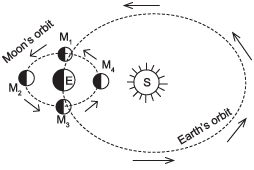
At which one of the following positions shown in the diagram will the height of the ocean tide be maximum?
- 10UPSC CSE I - 1999
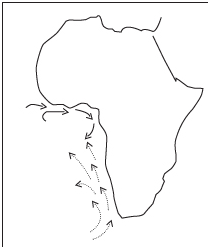
In the given map, which one of the following pairs of ocean currents are shown?
- 11UPSC CSE I - 1997
Which one of the following factors is responsible for the change in the regular direction of the ocean currents in the Indian Ocean?